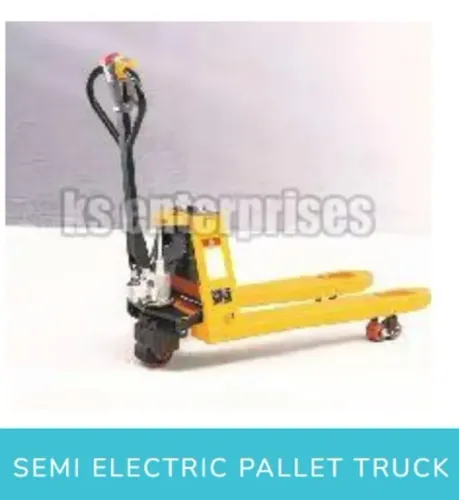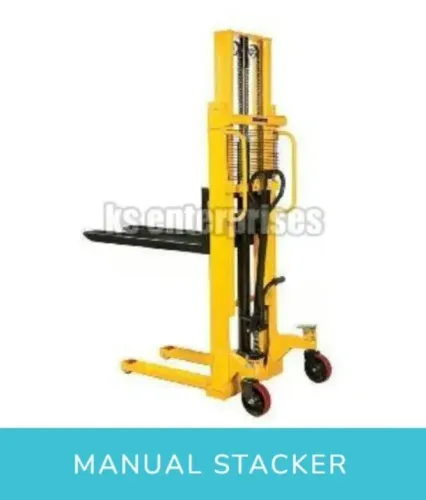

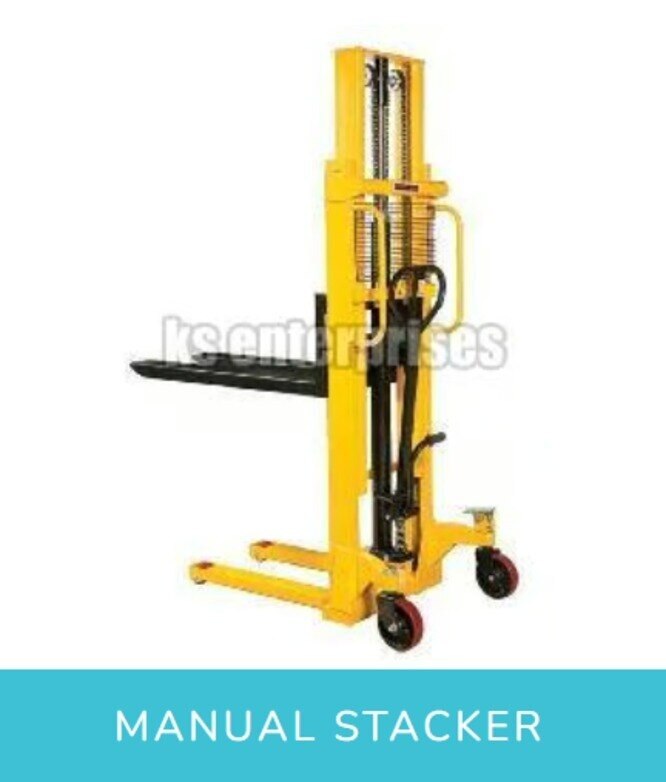
A conventional manual stacker does not use a traction battery: its hydraulic pump raises the forks, while an operator pushes or pulls the truck. Before you request a quotation, identify whether you need to move industrial batteries, power a stacker with a battery, or buy battery testing, charging and replacement support; then match the equipment to your load, aisle and charging conditions.
Key takeaways
- Confirm whether you need manual pumping, powered lifting or powered travel.
- Measure battery dimensions, pallet size, lift height and aisle width before requesting quotes.
- Specify the battery, charger and controls together to prevent compatibility problems.
- Compare written quotations for service response, parts availability and warranty coverage.
Confirm what “battery support” means before choosing a stacker
A conventional hand stacker does not need a traction battery: a handle or foot pedal operates its hydraulic pump, while you push or pull the truck manually. “Battery support” can instead describe a powered-lift or fully powered machine.
| Option | Battery function | Travel |
|---|---|---|
| Conventional hand stacker | None; hydraulic pump raises forks | Manual |
| Battery-assisted stacker | Powers lifting only | Manual |
| Fully powered stacker | Powers lifting and traction | Powered |
Require the quotation to state whether the battery powers lift, travel, or both. Also state whether the truck uses an industrial traction battery, not an automotive battery.
Clarify which application you are buying:
- A stacker designed to lift, move or position forklift batteries; this needs suitable forks, capacity, frame strength and handling controls.
- A stacker powered by a forklift battery; this needs a compatible battery compartment, electrical system and charger.
Define forklift battery support as four separate services:
- Supplying an industrial traction battery.
- Checking physical and electrical compatibility, including dimensions, voltage, connector and polarity.
- Supplying the correct charger.
- Providing testing, replacement, servicing and end-of-life collection.
A buyer searching for a manual stacker in delhi must confirm the operating mode. A pedestrian-propelled truck falls under ISO 3691-5; a self-propelled, rider-operated truck falls under ISO 3691-1. The equipment category and conformity documents must match how you will operate it.
Measure the battery, pallet and site before comparing machines
A stacker that meets its load rating can still be unusable if its mast cannot clear a doorway or its turning envelope does not fit the aisle. Measure the battery, pallet or tray, and site before comparing machines.
| Check | Record | Failure if missed |
|---|---|---|
| Industrial stacker battery | Length, width, height, weight, lifting points, terminals and connector | The battery will not fit, or lifting points will not engage safely |
| Pallet or tray | Opening size, depth, retaining features and load centre | Both forks cannot enter far enough, allowing side shift |
| Site | Aisle width, door and lift dimensions, rack-beam height, floor condition and ramp gradient | The truck cannot turn, pass, climb or place the load |
| Operating area | Temperature and available charging space | Battery performance, charging safety or access becomes unsuitable |
Ask each supplier to quote rated load capacity, maximum lift height, lowered fork height, fork length, fork outside width, mast type, turning radius and overall dimensions. Request the rating plate or residual-capacity chart for the exact model: capacity changes with load centre, lift height, mast configuration and attachments.
Compare fork length and width with the tray openings, confirm that both forks enter to the required depth, and check the load centre against the chart. Prevent side shift with a correctly sized tray, suitable fork spacing, retaining features or another approved restraint.
Include every site measurement in the equipment request, including charging space. Headline capacity alone does not prove safe fit or lifting performance.
Choose between a manual, semi-electric and fully electric stacker
A hand pallet truck moves loads at floor level only. A manual stacker adds short-distance pushing and hand-pumped fork lifting; it is not automatically battery-powered.
| Option | Lift | Travel | Best fit |
|---|---|---|---|
| Hand pallet truck | Manual, floor level | Manual | Moving pallets without stacking |
| Manual stacker | Hand-pumped | Manual | Occasional lifting over short distances |
| Semi-electric stacker | Powered lift | Manual | Frequent pallet lifting with short travel |
| Fully electric stacker | Powered lift | Powered traction | Repeated lifting, travel and controlled speed |
A powered-lift stacker with manual travel suits frequent pallet lifting over short distances. It removes repeated pumping effort without adding a powered traction system, but it needs battery charging and electrical controls.
A manual stacker is the wrong choice when the work involves:
- Frequent long-distance travel
- Steep ramps or uneven floors
- High stacking cycles
- Heavy batteries close to the rated load limit
- Powered lifting or controlled travel speed
A search for manual stacker forklift for battery support in delhi should end with a check of the actual operating limits, floor condition, ramp gradient and duty cycle with the manufacturer. Do not invent a safe limit from a catalogue headline; confirm the quoted model’s rating at the required lift height and load centre.
Specify the battery, charger and handling controls as one system
A battery is part of the stacker specification, not an accessory to add later. Ampere-hours alone do not prove compatibility: two batteries with the same capacity can differ in voltage, size, mass, terminals and charging requirements.
1. Require the purchase specification to state nominal voltage, rated capacity and test rate, battery dimensions, terminal arrangement, connector, polarity, mass, charger output, charging time, chemistry and the manufacturer-approved battery type. This prevents a wrong industrial stacker battery or charger from being supplied under vague forklift battery support.
2. Treat battery mass as a safety specification. It affects counterbalance, residual capacity, steering effort and stability. Do not replace a heavier lead-acid battery with a lighter lithium-ion battery unless the equipment manufacturer or authorised technical representative approves the substitution.
3. Match the charger’s voltage and charging profile to the chemistry. Flooded lead-acid requires controlled charging, ventilation, electrolyte checks and water top-up; sealed lead-acid uses a different charging arrangement; lithium-ion requires a compatible charger and battery-management system. The wrong charger can damage the pack or create a safety incident.
4. For a used or replacement lead-acid battery, request its manufacture date, voltage, capacity, watering condition and measured capacity or conductance. For lithium-ion, request battery-management-system fault history and state-of-health data.
5. Ask how end-of-life batteries will be collected and documented through registered entities under India’s Battery Waste Management Rules, 2022, rather than sent through general scrap channels.
Compare Delhi suppliers by the written quotation and service plan
A manual stacker supplier in Delhi earns your order through a checkable quotation, not the lowest catalogue price. Ask every supplier to separate these costs and commitments:
- Stacker, battery, charger, delivery, installation or commissioning, operator instruction, warranty and preventive maintenance.
- Truck, battery and charger warranty duration, exclusions and performance conditions.
- Exact model, battery compartment, duty cycle, charger model, and whether the battery powers lift, travel or both.
Supplier item | Supplier A | Supplier B Stacker model and residual-capacity chart | | Battery, charger and compatibility check | | Delivery, commissioning and operator training | | Warranty and preventive maintenance | | Service response and battery-repair provision | |
Request the rating plate or residual-capacity chart for the quoted truck; headline capacity changes with load centre, lift height, mast configuration and attachments. Before ordering, require a site visit covering aisle and doorway clearance, lift dimensions, floor condition, charging location and operator training.
For daily use, obtain written commitments for hydraulic seals, wheels, forks, electrical controls, connectors and charger repair, including a stated response time and a loan or replacement battery during repair. K. S. Enterprises belongs in the comparison when it can provide these Delhi-region commitments.
The phrase “battery support” is not enough. For a manual stacker forklift for battery support in Delhi, compare documented technical and after-sales terms against another manual stacker in Delhi supplier.
Related products
 | Industrial Stackers K. S. Enterprises is a trusted supplier of premium-quality Manual Stackers, providing cost-effective and efficient material handling solutions for... View product → |
 | Industrial Stackers K. S. Enterprises is a trusted supplier of high-quality Electric Stackers, offering efficient and reliable material handling solutions for... View product → |
Frequently asked questions
Does a conventional manual stacker need a forklift battery?
No. A conventional hand stacker uses a handle or foot pedal to operate its hydraulic pump and moves by manual pushing or pulling. Battery support refers to powered lifting or a fully powered machine.
What should you measure before buying a stacker in Delhi?
Measure the battery dimensions and weight, pallet length and width, required lift height, load weight, aisle width, floor condition and doorway clearance.
What is the difference between manual, semi-electric and fully electric stackers?
A manual stacker uses human effort for lifting and travel. A semi-electric model powers lifting but requires manual travel. A fully electric stacker powers both lifting and travel.
What should a stacker quotation include?
Request the rated capacity, lift height, battery type and dimensions, charger specification, control arrangement, warranty, service response time, spare-parts availability and delivery scope.
Related product
 | Industrial Stackers K. S. Enterprises is a trusted supplier of premium-quality Semi Electric Stackers, offering efficient and economical material handling solutions for... View product → |