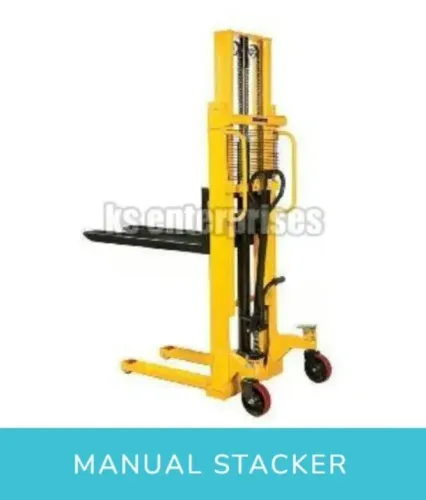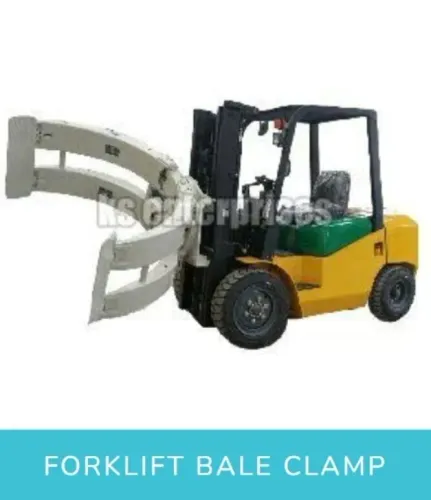

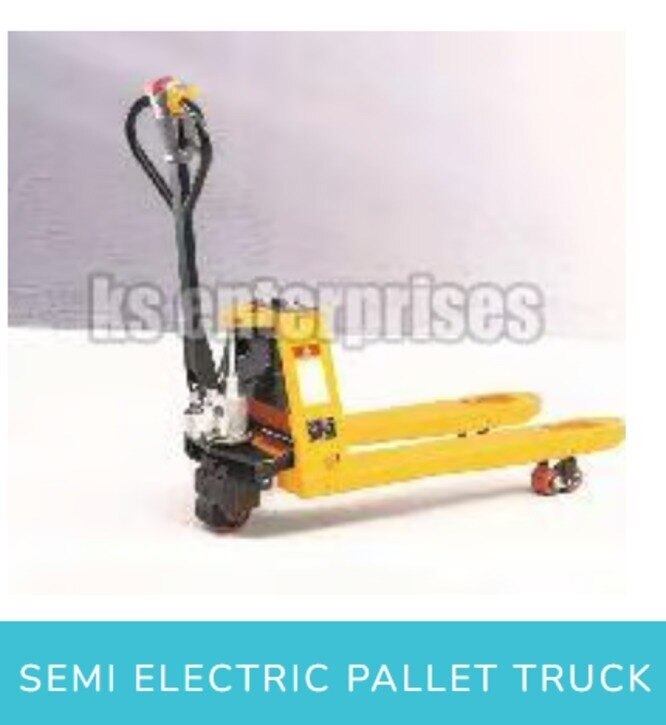
A hand pallet truck is a pedestrian-propelled device for lifting a pallet slightly clear of the floor and moving it by hand; it is not an attachment mounted to a forklift. By checking the pallet opening, load centre, floor, operating effort and supplier documentation, you can identify the right specification and avoid an unsafe or unsuitable quotation.
Key takeaways
- Confirm fork length, width and entry height match your pallets.
- Choose capacity above the load’s actual weight and verify the load centre.
- Use manual trucks on smooth, short routes with manageable traffic.
- Check the delivered truck against its quotation, plate and test load.
What a hand pallet truck is and how it works
A hand pallet truck is a pedestrian-propelled device for moving palletised goods across a floor. It has two forks, load rollers, steerable wheels, a handle, a hydraulic pump and a lowering control. It is not a forklift attachment.
An attachment mounts on a forklift carriage or fork arms, while the hand pallet truck has its own chassis and operating mechanism. Therefore, a search for a “hand pallet truck in Delhi” and a forklift attachment manufacturer in Delhi may combine two separate product categories; clarify the requested equipment before asking for a quotation.
- Push the forks fully into the pallet openings, checking that the tips do not strike a deck board.
- Pump the handle to raise the pallet, usually about 75–200 mm, until it clears the floor.
- Pull or push the truck at walking speed while keeping the load stable and the route clear.
- Operate the lowering control to place the pallet down; do not use the truck for rack loading, high stacking or lifting people.
Before selecting a model, compare these fields with your pallet and route:
- Rated capacity in kilograms, hydraulic pump type and lowering-control arrangement.
- Fork length, fork outside width, fork spread, lowered fork height and raised fork height.
- Pallet entry openings, deck-board clearance and pallet width; never assume a standard pallet fits.
- Steering-wheel and load-roller dimensions, wheel material, ground clearance and minimum turning radius.
- Net weight, floor condition and available service parts, because these affect handling and maintenance.
Which hand pallet truck specifications must match your pallet
Match the truck to your pallet openings and aisle before comparing prices. Measure the entry openings, deck-board clearance and pallet width; a 2,500 kg rating does not make every truck compatible.
| Field to compare | What to check | Why it matters |
|---|---|---|
| Rated capacity | Kilograms at the stated load centre | A heavier load or longer load centre reduces usable capacity |
| Fork dimensions | Length, outside width, fork spread, individual fork width and tip profile | The forks must enter fully, clear the bottom boards and withdraw without damage |
| Height and clearance | Lowered height, raised height and ground clearance | Common lowered height is 75–85 mm; lift is usually about 75–200 mm, only enough for travel |
| Mobility | Minimum turning radius, steering-wheel size, load-roller size and wheel material | The truck must turn in your aisle and cross your floor without excessive effort |
| Hydraulics and control | Pump type and lowering-control arrangement | These determine lifting effort, descent control and service needs |
| Truck data | Net weight, warranty exclusions and spare-part availability | These affect handling, ownership cost and repair delays |
Also compare fork length with the pallet’s depth. A long fork can strike the opposite side or obstruct a turn, while a short fork leaves the load unsupported.
Ask for the exact hand pallet truck specifications on the quotation, including the delivered wheel sizes and pump model, rather than accepting “standard 2-ton” as a complete description.
How capacity, load centre and wheels affect safe movement
A 2,000 kg rating applies only at the stated load centre, not to every load placed on the forks. Many trucks use a 600 mm load centre; a long pallet, concentrated weight or overhanging goods move the centre forward and reduce stability and usable capacity. Check the data plate and load diagram before moving.
| Factor | Effect on usable performance | What to check |
|---|---|---|
| Rated capacity | Exceeding it overloads the pump, frame and wheels, even on a smooth floor. | Match the total load weight to the rated capacity. |
| Load centre | A forward load increases steering effort and tipping risk. | Keep the load evenly distributed and within the marked centre. |
| Floor condition | Joints, broken concrete, dock thresholds and slopes increase rolling resistance and shock. | Measure thresholds and repair route defects before operation. |
| Wheel material | Polyurethane runs quietly and protects finished floors; nylon rolls easily on smooth floors but transmits impact; rubber grips better on uneven surfaces but requires more effort. | Match wheel material and diameter to the route. |
For a hand pallet truck in Delhi, dust, monsoon moisture and outdoor-to-indoor transitions make wheel and bearing choice important. Small wheels can catch in floor joints, while a larger load wheel crosses thresholds more smoothly. A wheel that suits a clean factory floor may drag, skid or wear quickly on a rough loading yard.
Before approving the route, confirm:
- The load remains stable with forks fully inserted.
- The wheels contact an intact, reasonably level surface.
- The operator can stop and steer without excessive pulling force.
- Replacement wheels, bearings and seal kits are available.
When manual operation is practical—and when it is not
A hand pallet truck is suitable for short travel on a level, sound floor when loads are moved occasionally and the operator can pull or push them without excessive force.
It works well for receiving bays, small warehouses, staging areas and vehicle unloading, but repeated trips, long aisles or ramps quickly turn manual handling into a productivity and fatigue problem.
| Operating condition | Manual hand pallet truck | Semi-electric or powered model |
|---|---|---|
| Travel distance | Short runs with frequent stops | Long aisles or repeated point-to-point movement |
| Work rate | Occasional pallet moves | Continuous loading, picking or dispatch work |
| Operator effort | Pumping and pulling remain comfortable | Reduced effort for frequent or heavy movement |
| Floor and gradient | Smooth, level floor | Ramps, thresholds or conditions requiring powered travel |
| Control requirement | Simple pedestrian operation | Better control when speed, volume or fatigue is a concern |
Compare a semi-electric model when the operator spends much of the shift moving pallets, or when starting a loaded truck demands unsafe force. Compare a fully powered pallet truck when travel itself needs motor assistance; “semi-electric” can mean powered lifting, powered driving, or both, so confirm the function in the quotation.
Before choosing a hand pallet truck in Delhi, record the load weight, daily pallet count, route length, gradients and turning space. Do not use it for rack loading, high stacking or raising a person; those jobs require equipment designed for elevation.
How to verify a Delhi supplier and the delivered specification
A “manual pallet truck supplier in Delhi” is not automatically a manufacturer. Ask whether the business manufactures, imports, assembles or distributes the model, then request its manufacturing or assembly address, model-level technical drawing, serial-number traceability and inspection record.
A forklift attachment manufacturer in Delhi handles a different product category: attachments fit forklift carriages or fork arms, while this truck has its own handle, hydraulic pump and load wheels.
Before accepting delivery, compare the quotation with the truck in front of you. Use this procedure:
1. Match the serial number, model code and rated capacity on the truck, invoice, warranty document and inspection record.
2. Measure fork length, fork outside width, fork spread, lowered and raised fork height, steering-wheel and load-roller sizes, turning radius and net weight against the approved hand pallet truck specifications.
3. Test full pallet entry, the pump stroke, controlled lowering and steering with an empty truck. Then perform a supervised load test within the stated capacity; stop if the pump leaks, forks sink or the frame twists.
4. Obtain the parts list, hydraulic seal and wheel part numbers, warranty exclusions, service contact and response process in writing. “Service available” is not support without named contacts and a repair route.
K. S. Enterprises can be assessed by the same evidence: ask for the exact model documents and confirm who will supply wheels, seals and pump components after delivery. A supplier that cannot identify these records is offering a product, not dependable support.
Related product
 | Pallet Trucks K. S. Enterprises is a trusted supplier of premium-quality Hand Pallet Trucks, offering reliable and cost-effective material handling solutions for... View product → |
Frequently asked questions
What is a hand pallet truck and how does it work?
A hand pallet truck is a pedestrian-propelled device with two forks, load rollers, steerable wheels, a handle, a hydraulic pump and a lowering control. Pumping the handle raises the forks; the truck then moves the pallet by pushing or pulling it across the floor.
Which hand pallet truck specifications must match a pallet?
Match fork length, fork width, fork outside width, lowered fork height, raised height and pallet entry clearance. Check that the forks enter fully without striking blocks, deck boards or the opposite side of the pallet.
How do capacity, load centre and wheels affect safe movement?
Select capacity using the truck’s rated load centre, not weight alone. A load placed farther from the fork heels reduces the usable capacity. Wheel material and size affect noise, rolling resistance, floor protection and control.
When is manual operation practical?
Manual operation suits short travel distances, smooth level floors, moderate loads and occasional pallet movement. Choose powered equipment when routes are long, gradients exist, loads are heavy or traffic makes repeated manual handling unsafe.
How can you verify a Delhi supplier and the delivered specification?
Ask the supplier for a written quotation showing capacity, rated load centre, fork dimensions, wheel material, warranty and delivery scope. Compare the delivered truck’s data plate and measurements with that quotation, then test steering, lifting, lowering and braking before acceptance.