
Efficient warehouses depend on more than storage racks and available floor space. Goods must move smoothly from receiving to inspection, storage, picking, staging, and dispatch. Choosing appropriate warehouse material handling equipment can reduce unnecessary movement and help teams manage these stages more systematically.
The first step is to understand the type of movement taking place.
Horizontal movement involves transporting pallets or goods across the warehouse floor. Hand pallet trucks and electric pallet trucks are common options for this purpose. Vertical movement involves lifting goods to racks or elevated storage positions, where stackers or forklifts may be required.
A small warehouse with light daily movement may have very different requirements from a distribution center processing large numbers of pallets. Equipment should therefore be selected according to workflow rather than simply warehouse size.
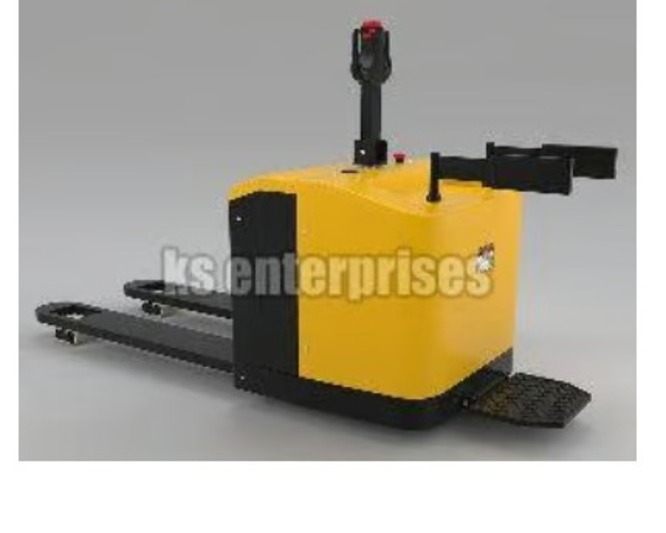
Hand pallet trucks can be practical for short-distance movement where operators need a straightforward method of shifting palletized loads. For more frequent pallet movement, an electric pallet truck may reduce the physical effort associated with repeated manual travel.
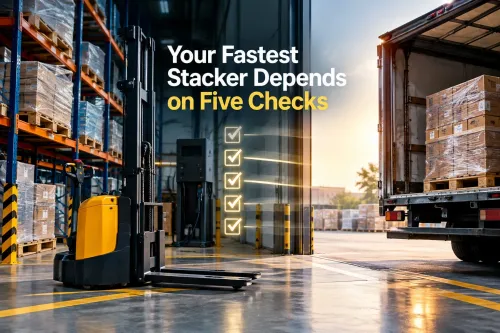
Electric stackers are useful when a facility needs both movement and pallet stacking but does not require a conventional forklift for every task. Forklifts become important when applications involve heavier loads, greater throughput, truck loading, higher lifting requirements, or more demanding handling cycles.
Warehouse managers should map their workflow before purchasing equipment. Identify:
- Where incoming goods are unloaded.
- How far pallets travel before storage.
- Rack heights and aisle widths.
- Average and maximum pallet weights.
- Picking and replenishment frequency.
- Dispatch volume during peak periods.
- Indoor and outdoor movement requirements.
This exercise can reveal bottlenecks that are not obvious from equipment specifications alone.
Delhi warehouses may also face space limitations and high movement volumes. In these conditions, turning radius, equipment dimensions, aisle clearance, battery charging arrangements, and traffic management become especially relevant.
Equipment condition matters as much as equipment type. Forks, wheels, tyres, hydraulic components, batteries, brakes, steering systems, and other wear items require appropriate inspection and maintenance. An otherwise suitable machine can become a productivity constraint when maintenance is consistently delayed.
K. S. Enterprises operates in the forklift and material handling segment for customers in Delhi who need equipment for industrial and warehouse applications. Matching equipment to the movement cycle can help businesses build a more practical handling setup.
A productive warehouse does not necessarily require more machines. It requires the right equipment at the right points in the workflow, with each machine selected according to load, distance, height, frequency, and site conditions.