
Rain does more than wet the frame of a bale clamp: it carries grit into pivots, weakens bale surfaces, and exposes hydraulic and electrical faults that can cause slipping or uneven closing. By the end, you will know how to inspect, dry, test, and service the attachment before a wet-bale handling task resumes.
Key takeaways
- Dry pads, pivots, pins, and hydraulic connections after every rain exposure.
- Remove saturated fibre and grit before lubricating clamp joints.
- Test grip on a small wet bale before handling a full load.
- Repair uneven closing before returning the forklift bale clamp to service.
Where Delhi monsoon moisture reaches a bale clamp
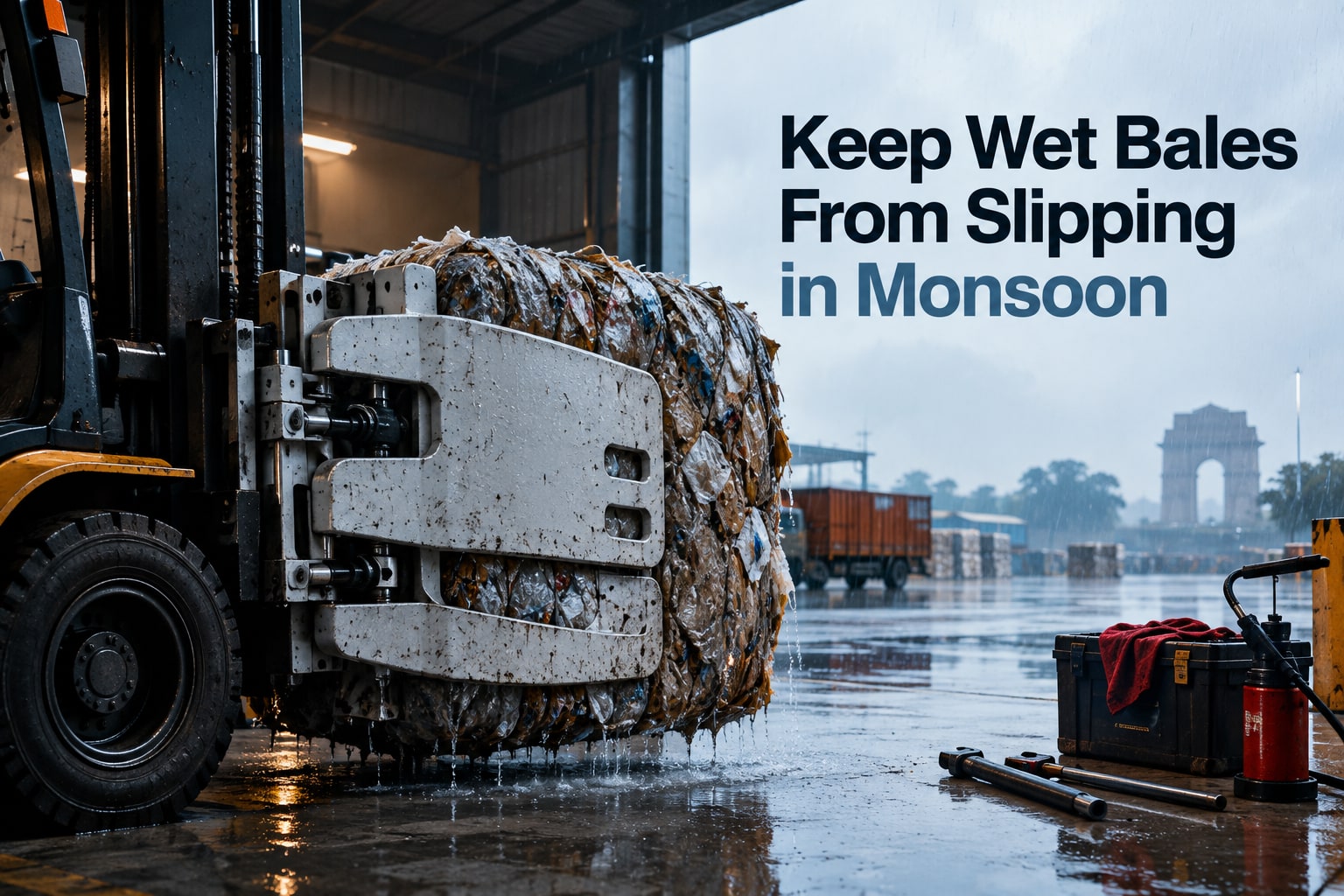
Rain threatens the joints and controls of a bale clamp more than its painted outer frame. During outdoor loading, water remains between clamp arms and pads, while wet compressed paper, textile, waste, or agricultural bales transfer saturated fibre, mud, and grit onto pads, pivot pins, bushings, cylinders, exposed fasteners, and grease points.
| Moisture location | What it threatens | What to inspect |
|---|---|---|
| Rod seals and cylinder rods | Water enters the hydraulic circuit, carrying rust and grit inward | Oil around rods, damaged seals, scoring |
| Hose ends, fittings, valves, and valve cavities | Contamination causes leaks, sticking, or erratic arm movement | Seepage, loose fittings, wet recesses |
| Pivot pins, bushings, and sliding surfaces | Water washes out grease and creates abrasive paste | Play, rust, uneven closing |
| Connectors, switches, proximity sensors, and solenoid plugs | Moisture creates intermittent electrical faults | Corrosion, loose plugs, delayed or stopped movement |
This is the path from forklift bale clamp rain damage in delhi to a grip failure: trapped water reaches seals, hose ends, valve cavities, or connectors, then affects the attachment’s hydraulic or electrical controls. Rainwater on the outside of the frame is less serious.
- Treat cloudy, milky, or hazy hydraulic oil as water contamination. Stop relying on topping up; arrange contamination diagnosis, filtration, or oil replacement under the attachment manufacturer’s procedure.
- Inspect electric forklifts and electrically controlled clamps after drying if movement is slow, stops mid-stroke, or changes behaviour. Repeated pressure-washing is not electrical diagnosis.
- Park under cover on a drained surface, with cylinder rods, hose ends, and connectors protected as the manufacturer permits. Do not trap condensation or conceal leaks. Examine the forklift and attachment before returning them to service.
Why a wet bale slips, deforms, or closes unevenly
Wet bale surfaces change the failure, not just the weight: softened packaging and saturated fibre reduce friction, alter mass, and weaken the bale’s structure. A forklift bale clamp grip problem in delhi may therefore begin at the bale rather than the hydraulic pump.
Check the contact path before raising pressure:
- Remove mud, wet fibre, oil, paint, and compacted residue; inspect contaminated, rounded, loose, or worn pads.
- Look for loose pins, worn bushings, water-and-grit abrasion, bent arms, linkage wear, and uneven arm travel or pad contact.
- Check for seal leakage at cylinder rods and hydraulic pressure loss in the circuit.
Hydraulic pressure is not gripping force. Cylinder area, linkage geometry, pad position, arm angle, and surface friction determine the force reaching the bale. Excessive pressure can crush or tear a bale; insufficient pressure causes dropping and instability.
Use the bale and attachment manufacturers’ pressure limits for the material, moisture condition, density, and permitted compression. Do not raise the relief-valve setting as a universal remedy; it can overload cylinders and frame members while leaving worn pads, pins, bushings, or leaking seals unresolved.
Recalculate forklift capacity using attachment weight, altered load centre, and rated clamp capacity, then obtain manufacturer approval. Under OSHA 29 CFR 1910.178, update capacity information when capacity or safe operation changes. A clamp that fits the carriage is not automatically interchangeable.
The post-rain inspection, cleaning, and lubrication routine
For bale clamp monsoon maintenance in Delhi, inspect before every return to service after rain, not only at scheduled servicing. A clean, dry attachment exposes defects that mud and wet fibre conceal.
1. Isolate the forklift and release hydraulic pressure as the manufacturer’s procedure requires. Check for cracked, swollen, or abraded hoses, oil around cylinder rods, damaged rod seals, leaks at fittings, loose pivot pins, missing retainers, rust at pivots, excessive play, worn or loose pads, bent arms, frame cracks, and secure carriage locking points.
2. Find hydraulic leaks with paper or cardboard, never a bare hand. A pinhole jet can penetrate skin. Replace a damaged hose; never patch it.
3. Remove fibre, mud, and compacted residue from arms, pads, pivots, and sliding surfaces using the approved cleaning method. Drain water from recesses, then dry the pads and every bale-contact surface. Grease, mud, and wet fibre can make paper or fibre bales slip and become contaminated.
4. Clean and inspect before lubricating. Apply only the grease named in the attachment manufacturer’s manual to pivot pins, bushings, and sliding surfaces. Keep grease off bale-contact areas and wipe excess from pads.
5. Park the attachment under cover in a drained area, with exposed rods, hose ends, and connectors protected as permitted. Leave airflow around it; a sealed cover can trap condensation. Remove unsafe equipment from service until repaired.
How to test grip before handling a full wet bale
Start with the clamp empty, then prove it can hold a representative wet bale under controlled load. Empty arm movement alone can hide weak grip, worn linkage, or a seal that leaks only under pressure.
1. Open and close the unloaded clamp through its full range. Confirm smooth, symmetrical travel, hose clearance, secure carriage locking, no hydraulic seepage, no abnormal noise, and no electrical hesitation. On an electric forklift or electrically controlled attachment, inspect wet or corroded connectors, wiring, switches, and solenoid plugs before testing.
2. Place a representative wet bale on a clear, level surface. Set pressure only to the bale and attachment manufacturer’s approved value; do not raise the relief valve to cure slipping. Perform a low-height lift and watch for arm drift, pressure loss, slow closing, slipping, bale distortion, or contact developing on one side.
Stop immediately if the bale slips or deforms.
3. Hold the bale briefly, then apply controlled braking and travel at low speed. Confirm that the clamp retains it before allowing normal production handling. Keep people outside the exclusion area.
A normal pressure-gauge reading does not rule out worn pads, leaking cylinder seals, damaged pins, loose bushings, or poor linkage geometry. Grip also depends on cylinder area, arm angle, pad position, and surface friction.
K. S. Enterprises can document a material handling equipment monsoon service in Delhi, including repairs and a post-service functional test, instead of simply adjusting a relief valve.
Related product
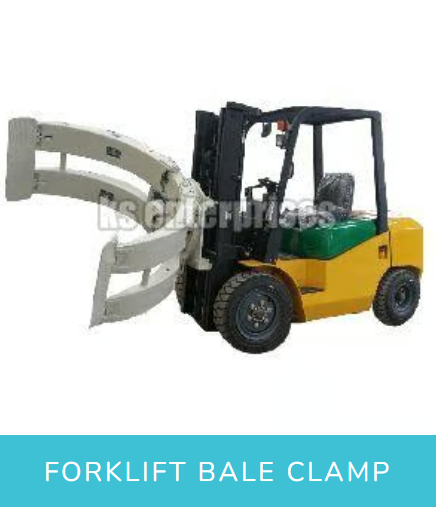 | Forklift Attachments Heavy-Duty Material Handling Solution by K. S. Enterprises K. S. View product → |
How to prevent recurring monsoon failures in Delhi
A forklift bale clamp program for monsoon problems must add event-based inspections to normal servicing. Material-handling equipment in Delhi needs inspection after heavy rain, flooding, pressure washing, outdoor parking, and wet-bale handling—not only on a calendar date.
1. Record each inspection against the truck number, attachment serial number, operating hours, weather exposure, bale material, moisture condition, and observed symptom. Compare these records to identify repeated hose, seal, corrosion, pad, or pivot failures, then separate them from incorrect pressure settings or operator technique.
2. Park the attachment under cover on a drained surface. Protect cylinder rods, hose ends, and electrical connectors as the manufacturer permits, but avoid covers that trap condensation or conceal an active leak.
3. Before every return to service, recheck carriage and attachment locking points and complete the forklift examination. Remove the truck and clamp from operation if either is unsafe.
4. Escalate to authorised service personnel for contaminated hydraulic oil, relief-valve questions, recurring pressure loss, damaged cylinders, electrical faults, or structural cracks. Escalate any defect that remains after cleaning and lubrication.
Keep event records with the attachment. A repeated symptom after the same exposure points to a control problem that routine calendar servicing will miss.
Frequently asked questions
Where does Delhi monsoon moisture reach a forklift bale clamp?
Water reaches clamp pads, arm joints, pivot pins, bushings, hydraulic-cylinder rods, exposed fasteners, grease points, and areas where wet fibre packs against the frame.
Why does a wet bale slip or close unevenly?
Saturated fibre reduces pad friction and changes the bale’s shape. Mud or packed fibre at the pads, unequal hydraulic movement, worn bushings, and seized pivots can also leave one arm tighter than the other.
What should you inspect after rain?
Remove fibre, mud, and grit; dry the pads and moving parts; check hoses, cylinder rods, pins, bushings, fasteners, and grease points; then lubricate only the specified joints.
How can you test grip before handling a full wet bale?
Use a small representative wet bale, centre it, close the clamp evenly, lift it slightly, and hold it still. Stop if the bale shifts, deforms excessively, or the arms do not maintain equal contact.