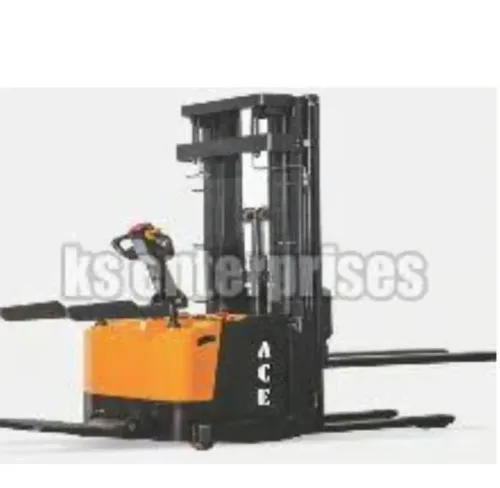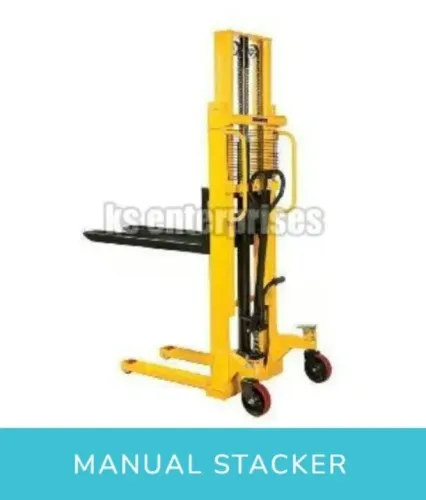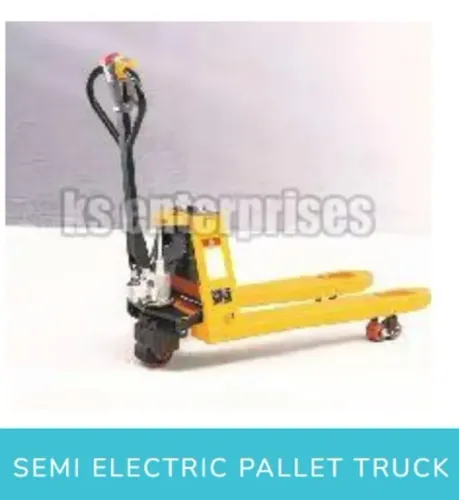

A distribution-centre forklift does more than lift a pallet: it transfers goods across docks, staging lanes, storage aisles and dispatch areas while conditions change from concrete floors to wet yards and confined trailers. By following the handling sequence and checking capacity, layout, emissions and traffic controls, you can decide whether a diesel truck fits the work and operate it without treating its headline tonnage as a guarantee.
Key takeaways
- Follow a controlled sequence from pallet inspection to dispatch placement.
- Read the capacity plate before lifting, especially with raised masts or attachments.
- Separate dock, yard and aisle controls for Delhi’s traffic and surface conditions.
- Match engine, tyres, mast and maintenance intervals to the duty cycle.
From vehicle unloading to dispatch loading
At the inbound dock, a diesel forklift truck takes goods from the delivery vehicle, stages them for checking, puts them into storage, replenishes pick faces and brings completed orders to dispatch. The route depends on pallet condition, dock safety and the truck’s rated capacity, not engine power alone.
- Check the delivery note, pallet condition and receiving location before lifting. Isolate a collapsed pallet; forks entering broken boards can drop the load.
- Set the trailer’s parking brake, secure the dock plate and inspect the floor before entering. Keep the forks low and the load stable while unloading.
- Place received pallets in a marked inspection or staging lane, clear of fire routes, dock edges and pedestrian walkways.
- Move approved pallets to rack locations within the capacity plate’s stated load centre and lift height. An attachment, offset load or high lift can reduce allowable capacity.
- Replenish pick faces and collect full pallets after checking the destination and pallet ID.
- Stage sealed orders by route or vehicle, then load the dispatch vehicle in a stable sequence that prevents crushing and axle overloading.
A diesel forklift truck for distribution centres in Delhi also needs an indoor exhaust assessment: particulate matter and nitrogen oxides make ventilation and exposure controls essential. Refuel only in a designated ventilated area with the engine stopped, spill materials ready and leaks kept out of traffic lanes.
The correct diesel forklift operation sequence
A safe diesel forklift operation starts before the pallet moves. Complete the pre-shift inspection, then remove the truck from service if any safety defect affects control, braking, lifting or load support.
1. Inspect the tyres and wheels, forks, locking pins, mast, chains, hydraulic lines, steering, brakes, horn, lights, alarms, seat belt and restraint. Check the nameplate and confirm that the truck’s rated capacity covers the load at its stated load centre.
2. Mount facing the truck, secure the seat belt, start the engine and test each control. Keep pedestrians outside the operating area before moving.
3. Approach the pallet squarely with the mast vertical and the forks level. Stop with the fork tips aligned to the openings, then drive forward until the forks are fully inserted and the load rests against the fork shanks or heel.
4. Lift the pallet only high enough to clear the floor, check that it is stable, and tilt the mast back only as much as needed. Never drag or push a damaged pallet with the fork tips.
5. Reverse slowly after checking behind and to both sides. Travel with the load low, avoid sudden acceleration, braking and turns, sound the horn at blind intersections, and slow down wherever the load or racking blocks your view.
6. Stop squarely at the stacking position, level the forks, raise the load only at the placement point, and move forward until it is correctly supported.
7. Lower the pallet fully onto the floor, rack or staging surface before withdrawing the forks. Look back while reversing, then check that the pallet has not shifted or damaged the storage position.
Reading capacity plates and matching the truck to the load
A 2.5-tonne plate does not mean 2.5 tonnes at every height. Read the data plate for rated capacity at the stated load centre and lift height; a 500 mm load centre and 4.5 m mast rating cannot be applied to a 700 mm-deep pallet lifted to 6 m.
Use the lower rating when your load exceeds the listed geometry.
Check these before assigning a diesel forklift truck:
- Weigh the heaviest complete pallet, including wrapping or a steel stillage, and measure its depth, width and any offset. An uneven or projecting load moves the centre forward and reduces the stability margin.
- Subtract attachment weight from available capacity. A side-shifter, fork positioner, clamp or drum handler changes the effective load centre; use its attachment-specific plate or documented revised capacity, never the truck’s unmodified rating.
- Match mast lift height to the highest rack beam while allowing clearance for the pallet. Capacity falls as height increases, so confirm residual capacity at that exact height.
- Measure the aisle with the actual pallet and turning method. A published turning radius does not prove clearance around racking, end protection or pedestrians.
- Check floor load rating, potholes, gradients, dock plates and trailer access. Secure the trailer, and verify that the dockboard supports the combined truck-and-load weight.
A forklift truck for logistics is unsuitable if any one of those checks fails. Keep the load low during travel: raising it, sharp turning or sudden braking can overturn a truck inside its stability triangle, even below nominal capacity.
Dock, yard and aisle controls in Delhi conditions
At a dock, secure the vehicle before the forks enter it: apply the trailer brake, fit wheel chocks or engage the dock restraint, and check that the dock plate is locked and rated for the combined truck and load.
Inspect the trailer floor for damage, keep the dock edge guarded, and prevent people from standing between the truck and vehicle.
| Location | Control that changes |
|---|---|
| Dock and trailer | Travel straight across the dock plate with the load low. Keep the trailer empty of pedestrians while loading or unloading, and stop if the plate shifts or the floor flexes. |
| Open yard | Use marked forklift lanes, separate them from trucks and public traffic, and slow on wet, muddy or uneven surfaces. A site-only diesel forklift in Delhi must remain inside controlled premises; public-road travel requires separate checks for registration, lighting, insurance and driver authorisation. |
| Narrow aisles | Measure the actual pallet, truck turning path and rack clearances. Protect rack ends, restrict pedestrian entry and use a spotter where the load blocks the view. |
| High-bay racking | Confirm capacity at the planned lift height and load centre. Keep the mast vertical during placement, square the truck to the rack and stop if the floor or rack is damaged. |
For a forklift truck for logistics, separate people and vehicles by design rather than relying on the reversing alarm.
- Install barriers or rails along walking routes.
- Mark crossings with stop lines and provide mirrors at blind intersections.
- Use speed limits, warning signs and dedicated staging areas.
- Require the operator to slow, sound the horn and make direct visual contact where racking or the load blocks sight.
Choosing and maintaining a diesel truck for the duty cycle
Choose by duty cycle, not engine size. A diesel forklift in Delhi suits long outdoor runs, heavy loads and multiple shifts, but short indoor moves can make exhaust control, ventilation, noise and fuel handling more expensive than the truck’s purchase price.
| Option | Best fit | Cost and control questions |
|---|---|---|
| Diesel | Yards, docks, gradients and heavy loads | Compare fuel use, idle hours, tyres, servicing and downtime |
| Electric | Enclosed warehouses and short pallet moves | Price charging space, battery replacement, charging time and ventilation savings |
| LPG | Mixed indoor-outdoor work where permitted | Check cylinder handling, fuel supply, exhaust controls and service access |
For a diesel forklift truck for distribution centres in Delhi, check the data plate at the actual load centre and lift height. Compare residual capacity with pallet dimensions, mast height and attachment weight; a headline 2.5-tonne rating does not guarantee that capacity at the rack.
Require a documented ventilation and exposure assessment before indoor use. Diesel particulate matter and nitrogen oxides need control, especially in a sealed building. Refuel only in a designated ventilated area with the engine stopped, ignition sources controlled and spill materials available.
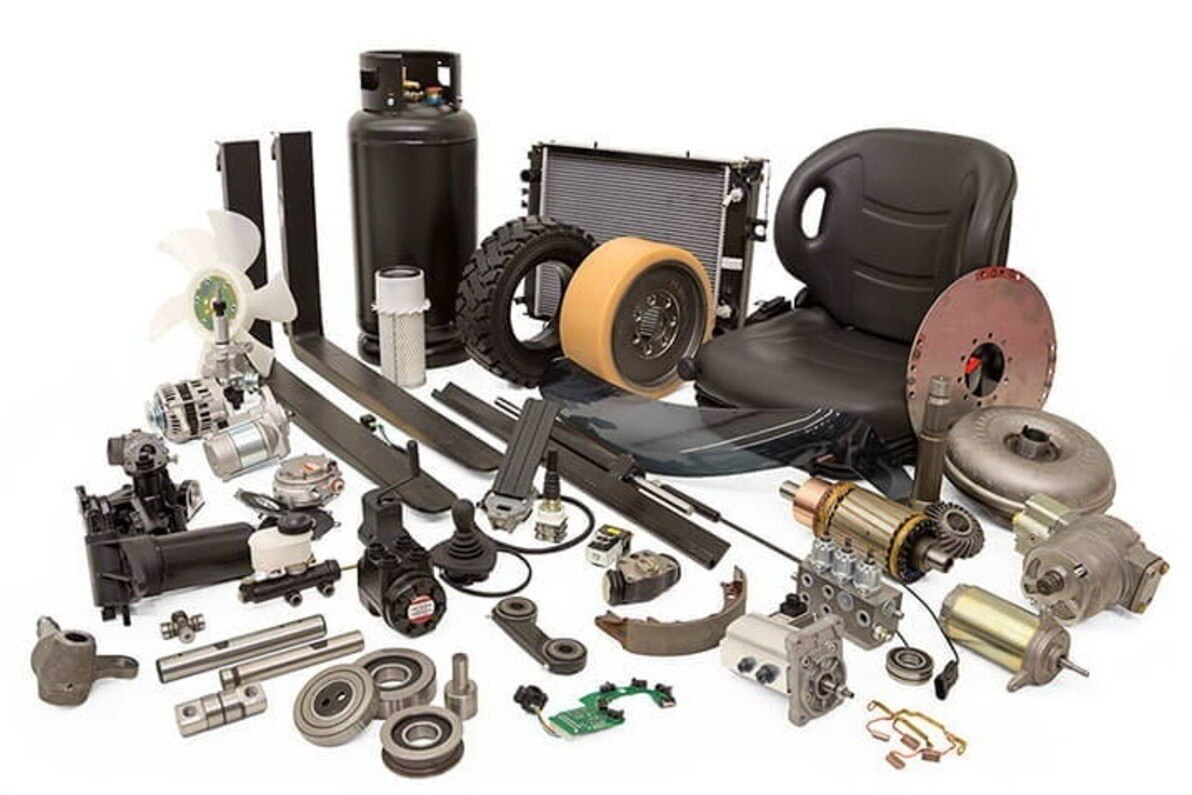
Budget scheduled servicing, filters, hydraulic checks, tyre replacement and lost shifts while parts are unavailable. Every shift, inspect forks, pins, chains, mast, leaks, brakes, steering, alarms, restraint and the nameplate; remove a defective truck from service. K. S. Enterprises can help you compare an ACE truck’s specification with local parts and repair support before purchase.
Related products
 | Forklifts K. S. Enterprises is a trusted supplier of high-performance Diesel Forklifts, providing reliable and efficient material handling solutions for... View product → |
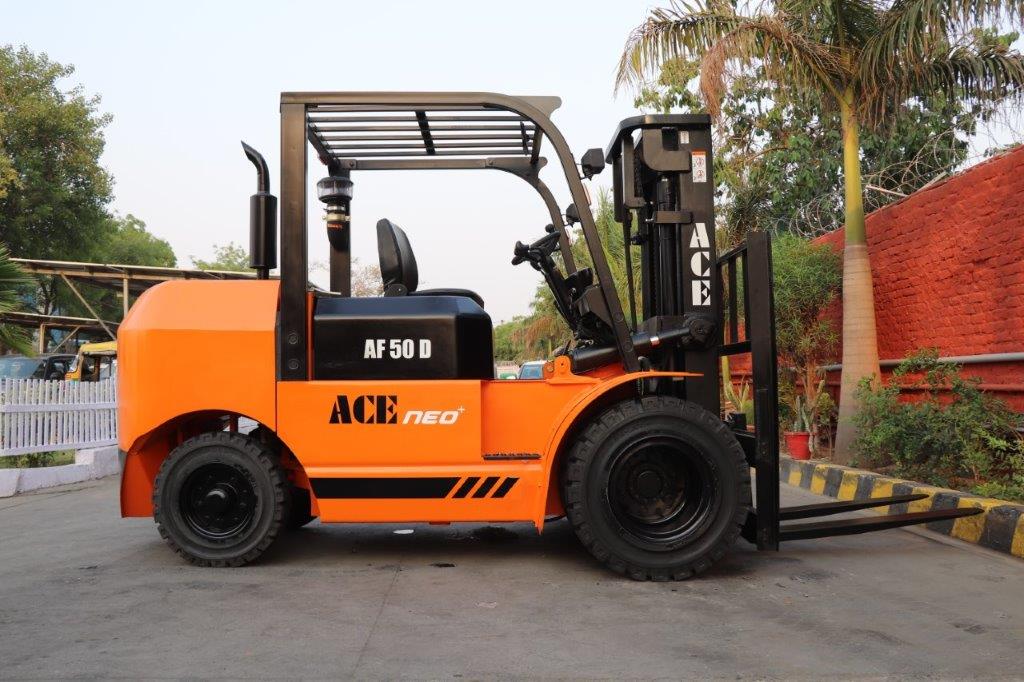 | Forklifts ACE Diesel Forklift Truck - Model AF50D – BS-V Engine TATA Power Steering (Automatic Transmission) Standard Accessories View product → |
Frequently asked questions
What is the correct diesel forklift operation sequence?
Inspect the truck and pallet, confirm the load and capacity plate, approach squarely, insert the forks fully, lift with the mast controlled, travel with the load low, place it securely, and park safely.
How do you match a diesel forklift to a distribution-centre load?
Compare the load weight, dimensions, load-centre distance, lift height and attachment weight with the truck’s capacity plate. Use the reduced rating shown for attachments or extended load centres.
What controls matter at docks, yards and warehouse aisles in Delhi?
Secure trailers before entry, check dock plates and floor edges, control pedestrians and reversing, reduce speed on uneven yards, and maintain clearance at aisle intersections.
How should you choose and maintain a diesel forklift for its duty cycle?
Assess operating hours, lift heights, surface conditions, travel distance, indoor air requirements and attachment use, then schedule inspections for tyres, forks, mast, hydraulics, brakes, steering and engine systems.