
Choosing an electric stacker is not simply a question of lifting capacity or purchase price. You need to match the machine to pallet weight, rack height, aisle geometry, battery routine, floor conditions and the support available after delivery so that it improves daily handling instead of creating a new bottleneck.
Key takeaways
- Measure rack height, aisle width, floor condition and pallet dimensions before buying.
- Choose capacity using the heaviest load and its load-centre distance.
- Compare battery runtime with travel distance, charging access and operator workload.
- Confirm maintenance, spare parts, training and response arrangements before daily operation.
What an Electric Stacker Does in a Working Warehouse
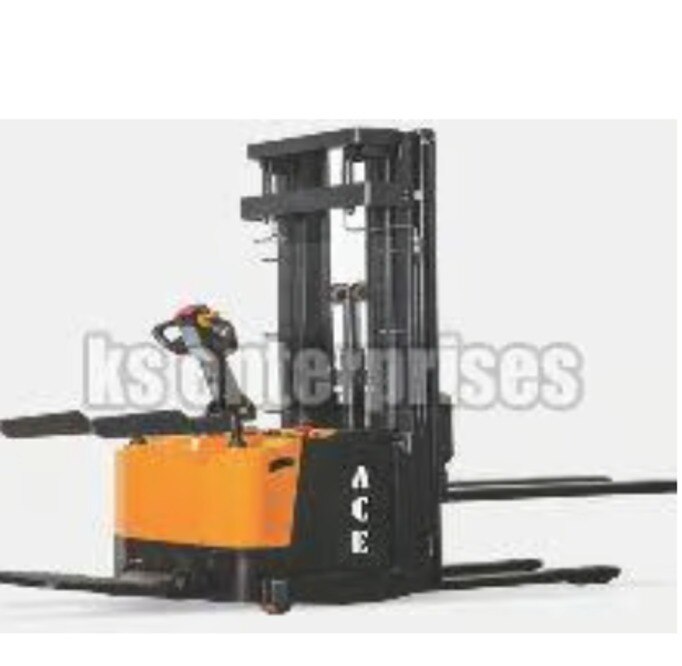
An electric stacker suits short-distance pallet work: lifting pallets into rack positions, staging goods, and placing loads at a workbench or dispatch point. It works best on smooth, level floors where travel distances and throughput are moderate.
A walk-behind model lets the operator guide the machine from the floor, while a ride-on version reduces fatigue across longer internal routes. Check that the forks fit the pallets and that the turning radius, mast and guard clear the aisle, rack and door; a compact machine can still fail in a tight layout.
| Machine | Best use | Main limitation |
|---|---|---|
| Electric stacker | Short moves and vertical pallet storage | Not ideal for long site-wide transport or steep ramps |
| Counterbalanced forklift | Outdoor work, high throughput and varied loads | Larger turning envelope, more noise and higher running burden |
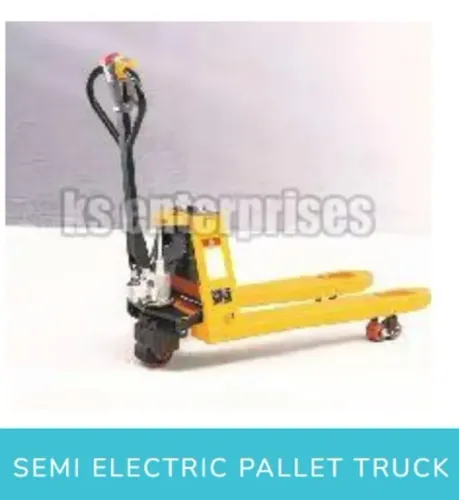
| Powered pallet truck | Horizontal pallet movement and staging | Usually lacks the lift height for rack storage |
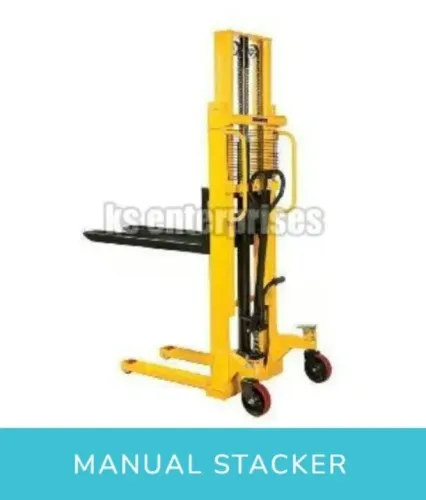
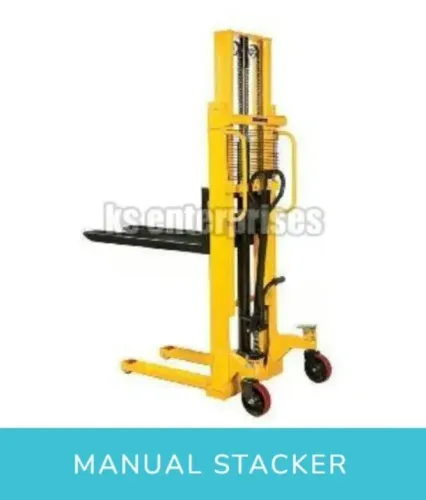
| Semi-electric or manual stacker | Light-duty lifting with limited daily use | Slower and more operator effort than a fully electric model |
Electric stacker benefits include lower local emissions and quieter operation than internal-combustion trucks, which helps in enclosed warehouses, food-related areas and retail back rooms. They still require authorised operators, pedestrian separation and controlled battery charging with suitable ventilation.
Compare the purchase price with the battery, charger, servicing, wheels and eventual battery replacement; an undersized stacker becomes an expensive interruption.
The Capacity and Site Measurements That Decide the Purchase
A 1,000-kg nameplate does not mean the stacker can lift 1,000 kg to every rack level. Check rated capacity, residual capacity at the intended lift height, load-centre distance, maximum lift height and fork dimensions against the actual pallet and load.
An industrial stacker supplier in Delhi should calculate this from your heaviest, tallest load—not from the model’s headline rating.
Compare the machine data with these site measurements:
- Measure the narrowest aisle, then add the stacker’s turning radius and full turning envelope. A compact chassis still fails if the mast, guard or load swings into the rack.
- Measure rack beam height, ceiling height, sprinkler clearance and the door’s clear opening, including the raised mast and overhead guard.
- Check floor flatness, joints, potholes and the maximum ramp gradient. A gradient beyond the machine’s rated limit can cause rollback, loss of braking control or reduced lifting performance.
- Confirm pallet length, width, entry opening and bottom-board clearance against fork length, fork spread and adjustment range.
| Specification | What to compare | Consequence of a mismatch |
|---|---|---|
| Rated capacity | Load weight versus nameplate capacity | Overload damages forks, chains and hydraulics |
| Residual capacity | Load weight at the required lift height | The stacker may stop below the rack beam |
| Load centre | Actual load centre versus rated distance | Forward stability falls as the load projects |
| Dimensions | Machine width, turning radius and height versus site clearances | A “compact” machine can remain unusable |
How Batteries, Travel Distance and Operator Workload Affect Benefits
Choose by duty cycle, not battery label: a walk-behind machine fits short, intermittent pallet moves, while a ride-on model earns its place when travel distance, pallet volume and operator hours make walking the constraint.
| Option | Battery and operating profile | Best fit |
|---|---|---|
| Walk-behind, lead-acid | Lower initial cost; needs watering, ventilation and a full charging period; spare battery may be necessary for two shifts | Short routes, moderate lifts and planned charging |
| Walk-behind, lithium-ion | Higher purchase cost; supports opportunity charging, has no watering routine and keeps output steadier across a shift | Repeated short moves where charging time is limited |
| Ride-on, lithium-ion or lead-acid | Higher machine cost, but faster travel and less operator fatigue; battery capacity must cover travel, lifting and waiting time | Long internal routes, high pallet volume and extended operating hours |
Compare battery capacity in voltage and ampere-hours, then calculate energy used per shift from travel distance, lift cycles, load weight, ramp work and idle time. A small battery can make a low-priced model unavailable before the shift ends; a second battery also requires storage, handling equipment and a safe charging bay.
Ask for the permitted ambient-temperature range, charging-temperature limit, ventilation requirement and ingress protection. Delhi heat, dust and intensive charging accelerate battery and electrical wear, so confirm the cleaning method and warranty exclusions.
Include charger, scheduled servicing, load wheels, travel wheels and eventual battery replacement in the ownership calculation, then require electric stacker support with model-specific diagnostics and parts availability.
What Electric Stacker Maintenance and Supplier Support Should Include
A supplier keeps your stacker available through defined service commitments, not a nearby showroom. Judge the material handling equipment supplier electric stacker for support in Delhi by asking for written response times, parts lead times and escalation contacts before you place the order.
Request this checklist:
- Technician response time for a breakdown, and the person who takes an unresolved case beyond the first visit
- Preventive-maintenance intervals stated in operating hours, with inspection records supplied after each visit
- Stock status and lead times for load wheels, drive wheels, forks, chains, hydraulic seals, fuses, connectors, batteries and chargers
- Battery and charger diagnostics, including testing for connector damage, charging faults and declining capacity
- Warranty exclusions covering dust, heat, misuse, impact damage, unsuitable charging and unauthorised repairs
- Access to a loaner or standby stacker when a repair exceeds the promised turnaround time
- A loaded site trial that checks travel, braking, lifting and lowering on your actual floor, pallets and ramps
Electric stacker maintenance must cover more than battery charge. The service sheet should record brakes, emergency-stop and dead-man controls, horn, chains, mast rollers, forks, load backrest, tiller, wheels, hydraulic leaks, warning devices, charger leads and structural damage.
Ask how Delhi heat, dust and charging-room conditions affect the warranty, cleaning method, permitted temperature range and charging limits. K. S. Enterprises becomes a more useful choice when it can document these commitments and match parts and technicians to your installed model.
Related product
 | Industrial Stackers K. S. Enterprises is a trusted supplier of high-quality Electric Stackers, offering efficient and reliable material handling solutions for... View product → |
The Safety and Acceptance Checks Before Daily Operation
Do not release an electric stacker for routine work until it passes an empty-function check, a controlled load test and an operator sign-off. A skipped brake check or damaged fork can turn a small handling job into a dropped pallet or pedestrian injury.
- Inspect forks, heel welds, mast channels, chains, hydraulic hoses, load wheels, drive wheel, guards and labels. Reject the machine for cracks, bent forks, leaking fluid, loose fasteners or unreadable capacity plates.
- Test steering, travel in both directions, service brake, parking brake, horn, emergency-stop button, key switch, lift and lower controls, anti-roll-back function and tiller safety switch.
- Confirm the rated capacity and residual capacity at the intended lift height. Test with a representative pallet, centred load and clear floor; stop if the stacker strains, tilts or lowers unevenly.
- Verify aisle width, turning space, floor flatness, ramp gradient, rack clearances and door height with the mast lowered and raised. Mark pedestrian routes, exclusion zones and the charging area.
- Examine the battery case, terminals, connector and cables. Match the charger to the battery, provide ventilation, prohibit smoking and keep charging away from water, heat and combustible storage.
- Train each operator on load-centre limits, travel with the load low, visibility, ramps, parking, pedestrian priority, emergency isolation and daily reporting. Record practical assessment before granting access.
A material handling equipment supplier in delhi should provide the acceptance record, inspection schedule, charger instructions, warranty exclusions and emergency contact. Keep model-specific parts and fault codes documented so a failed brake, connector or charger is reported before the next shift.
Frequently asked questions
What work is an electric stacker suited to?
It suits short-distance pallet handling, rack placement, staging, and moving loads to workbenches or dispatch points.
Which site measurements affect electric stacker selection?
Check load weight, lift height, pallet dimensions, aisle width, turning space and floor condition before selecting a model.
How do battery use and travel distance affect electric stacker benefits?
Longer travel distances and higher daily throughput increase battery demand, charging needs and operator workload.
What should electric stacker maintenance and supplier support include?
Confirm planned maintenance, battery care, parts availability, fault response, operator guidance and pre-use safety checks.