
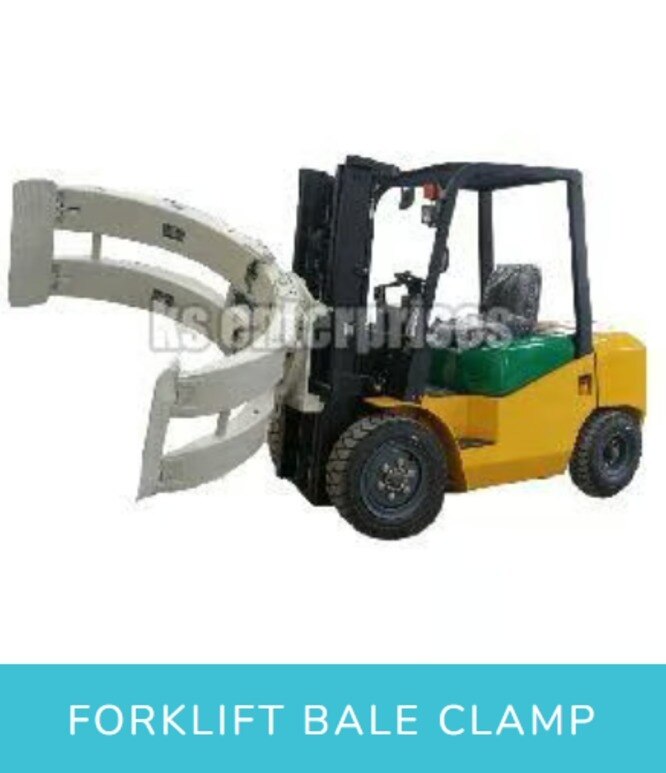
Bale slippage, crushing, uneven gripping and hydraulic drift can originate in the attachment, forklift, mounting, bale or operating method. Use the fault checks, capacity calculations, inspection steps and supplier questions below to identify the cause before a damaged bale or falling load becomes an incident.
Key takeaways
- Test the clamp empty before loading a known, stable bale.
- Inspect hoses, arms, carriage stability and pressure response before lifting.
- Match clamp pad shape and capacity to bale size, weight and condition.
- Set a repair and testing schedule before clamp wear causes downtime.
Trace Each Bale Clamp Fault to Its Real Cause
When choosing warehouse material handling equipment for forklift bale clamp problems, isolate the source before replacing parts. Run the clamp empty, then on a known bale, while watching arm travel, pressure response, hose movement and carriage stability.
A fault that appears only under load points toward bale condition, residual capacity or technique; one that appears empty points toward the clamp, hydraulics or mounting.
| Fault symptom | Clamp-related clue | Other cause to prove or exclude |
|---|---|---|
| Bale slips | Worn, contaminated or misaligned pads; unequal arm travel | Bale density, wrapping or orientation; insufficient pressure, excessive travel speed or turning with the load raised |
| Bale crushes or tears | Damaged pads, incorrect pad profile or excessive clamp force | Soft or poorly compressed bale; pressure set too high or operator clamping off-centre |
| Clamp drifts open | Cylinder seal bypass or leaking valve | Forklift control valve, hose connection or relief circuit; test whether drift occurs with the truck engine off |
| Slow opening or closing | Restricted hose, blocked fitting or damaged cylinder | Low hydraulic flow, low oil level, cold oil or a faulty forklift valve |
| One arm moves first | Bent arm, seized pivot pin or unequal cylinder condition | Twisted mounting, carriage damage or uneven bale surface |
| Clamp will not release | Sticking valve, seized pivot or damaged cylinder rod | Forklift valve not returning, trapped hydraulic pressure or operator holding the control incorrectly |
| Hydraulic leak | Wet hose, fitting, seal or cylinder rod | Chafing from incorrect hose routing or damage at the truck connection |
Confirm the diagnosis with a controlled pick-and-place test using the heaviest and least-frictional representative bale. Inspect mounting locks, carriage engagement and visible deformation before blaming the attachment; a loose mount can imitate clamp drift.
If the clamp works correctly on a sound bale at low travel speed but fails during turns or with a blocked view, correct the operator method rather than increasing pressure.
Inspect, Rate and Set the Clamp Before Lifting
Prove suitability with the attachment-specific capacity plate, hydraulic specifications and a loaded cycle test—not pressure alone. The forklift’s basic rating becomes invalid after the clamp adds weight and moves the load centre forward.
1. Record the truck make and model, carriage class, mast configuration, rated capacity at the actual load centre, attachment weight, hydraulic flow and pressure limits. Confirm the revised data plate shows residual capacity for the heaviest bale.
2. Measure the bale envelope, density and centre of gravity. Inspect clamp arms, contact pads, welds, pivot pins, cylinders, hoses, fittings, locking components and carriage mounting for wear, cracks, leaks, deformation or interference. Check that hose routing cannot catch on the mast, rack or aisle edge.
3. Operate the clamp empty through its full opening and closing range. Both arms must travel evenly, stop cleanly and hold position without cylinder creep. Test the truck’s auxiliary valve and confirm pressure at the clamp inlet against the manufacturer’s specified range.
4. Run repeated pick-and-place cycles using the heaviest and least-frictional representative bales. Check for slip, crushing, tearing, pad deflection, unequal arm travel, leaks, hydraulic heat and contact with racks. A test on an empty clamp or one ideal bale proves nothing.
Do not raise relief pressure to cure poor grip. Holding force also depends on arm geometry, pad condition, bale compression and surface friction. Select forklift attachments for warehouses by aisle clearance and visibility as well as weight capacity; keep the load low during travel.
Match the Clamp to Bale Condition and Handling Method
A bale clamp provides the right grip when the bale is dense, intact, stable under side pressure and handled without damaging its wrapping, strapping or fibres. Match the attachment to the bale’s weight, stiffness, surface friction, orientation and stacking pattern—not just its external dimensions.
| Option | What it means | When it applies |
|---|---|---|
| Forks | Support the load from underneath | Rigid, palletised or strapped bales with a firm base; avoid loose bales that can roll or fall |
| Fork sleeves | Enclosed fork surfaces that spread support | Soft or narrow bales needing more bearing area, when the sleeve capacity and fit are confirmed |
| Paper-roll clamp | Curved, padded arms for cylindrical loads | Paper rolls; do not substitute it for a bale clamp on irregular or compressible bales |
| Carton clamp | Broad, lower-pressure pads | Firm boxed loads; it can crush fibrous bales or fail to hold uneven faces |
| Push-pull attachment | Pulls slip-sheeted loads onto platens | Slip-sheet handling where forks would puncture or cannot enter the load |
| Dedicated bale grab | Bale-specific arms, teeth or shaped pads | Round, loose, wet or highly variable bales that need positive engagement |
| Bale clamp | Adjustable opposing arms with controlled pressure | Uniform, stable bales whose surfaces tolerate clamping without crushing or tearing |
Validate the choice with repeated pick-and-place cycles using the heaviest and least-frictional representative bales. Check for slip, deformation, unequal arm travel, hydraulic heat, leaks and contact with racks or aisle edges; an empty clamp proves nothing.
Large bales can block the forward view and change turning clearance. Keep the load low, preserve a clear sightline and use a spotter where aisle geometry demands it. These checks belong in any acceptance test for forklift attachments for warehouses.
Control Wear, Repairs, Testing and Daily Operating Risk
A bale clamp returns to production only after the fault is repaired, its cause is recorded, and the attachment passes a loaded test. Maintain a service log for pad wear, pivot-pin play, weld cracks, hose damage, cylinder seals, fittings, locking components and lubrication.
Replace damaged hoses and seals; do not tighten a leaking fitting as a permanent repair.
Remove the clamp from service immediately if you find:
- Cracked welds, bent arms, distorted pads or excessive pivot movement
- Hydraulic leakage, clamp drift, slow movement or failure to release
- Unequal arm travel, damaged locking parts or insecure carriage mounting
- Bale slip, crushing or tearing during a representative handling cycle
Tag the attachment “Do not use,” isolate it from operators and identify whether the cause lies in the clamp, forklift valve, hose routing, mounting or bale surface. A repair is incomplete until a technician checks pressure, flow and valve operation, then repeats the test.
Acceptance testing must use the heaviest and least-frictional bales, including wet, oily, dusty or plastic-wrapped surfaces. Run repeated pick-and-place cycles and check slip, bale deformation, arm synchronisation, hydraulic heat, leaks, rack clearance and release. Test an empty clamp or one dry bale, and the fault can return on the first shift.
Operate with the load low and the view clear; use a spotter where tall bales block sightlines. Include field-service response, spare hoses and seals, operator training and periodic inspection when comparing warehouse material handling equipment in Delhi, not just the replacement clamp price.
Specify the Right Support Before Buying in Delhi
Require a compatibility dossier, witnessed acceptance test and written service commitments before approving any attachment from a forklift bale clamp supplier in Delhi. A price alone does not prove that the clamp suits your truck or duty.
1. Demand a quotation showing the forklift make and model, mast configuration, carriage class, rated capacity at the actual load centre, attachment weight, mounting standard, hydraulic flow and pressure, hose-routing requirements, bale envelope and clamp-force limits. Require a revised data plate showing residual capacity after installation.
Add integrated side-shift to the calculation; its weight and forward offset can reduce capacity.
2. Give the supplier the bale weight range, dimensions, density, compression, wrapping or strapping, handling orientation and stacking pattern. Require a written selection basis for the heaviest and least-frictional bales, because equal-sized bales can have different grip and crushing risks.
3. Make acceptance testing part of the purchase order. Witness repeated pick-and-place cycles, checking slip, bale deformation, unequal arm travel, hydraulic heat, leaks, release failure, rack interference and aisle clearance. An empty-clamp demonstration proves little.
4. Specify attachment fitment, hydraulic troubleshooting, spare seals and hoses, periodic inspection, operator training and a named response time. Confirm local parts stock and field-service coverage for multiple-shift work. This is the support needed for warehouse material handling equipment for forklift bale clamp problems.
K. S. Enterprises should document those checks when supplying warehouse material handling equipment in Delhi, rather than treating the clamp as a standalone purchase. Reject the quotation if it omits the data plate, test method or service response terms.
Related product
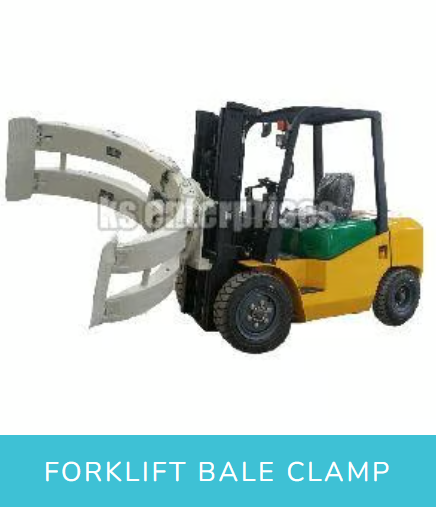 | Forklift Attachments Heavy-Duty Material Handling Solution by K. S. Enterprises K. S. View product → |
Frequently asked questions
How do you trace a forklift bale clamp fault?
Run the clamp empty, then test it on a known bale. Watch arm travel, pressure response, hose movement and carriage stability to separate hydraulic, mechanical and load-related faults.
What should you inspect before lifting a bale?
Check the attachment rating, clamp arms, pads, pins, hoses, fittings and carriage connection. Confirm the clamp setting suits the bale and test its movement before lifting.
How do you match a bale clamp to the material?
Compare bale size, weight, wrapping, firmness and handling method with the clamp’s capacity, arm reach and pad design. A damaged or loose bale needs a different handling plan.
What support should you specify when buying a bale clamp in Delhi?
Specify installation, operator guidance, inspection intervals, spare hoses and wear parts, repair response and testing records. Confirm that the supplier can support your forklift and warehouse conditions.