
A powered pallet truck that travels slowly, lifts weakly or stops intermittently does not automatically need a new battery. By separating travel, lifting, steering, braking and runtime symptoms, then checking the right measurements, you can identify whether the fault belongs to the battery, charger, controls, drive system, hydraulics or operating conditions—and decide when to stop using the truck.
Key takeaways
- Classify the symptom before replacing the battery, motor or controller.
- Test battery voltage under load, not only at rest.
- Inspect the drive wheel, brake release, cables and floor resistance.
- Request repair when measured faults cost less than reliable replacement.
Which powered pallet truck problem are you actually seeing?
Classify the failure before replacing a component. Reduced travel speed or weak acceleration can result from battery-voltage collapse, a dragging electromagnetic brake, worn drive wheel, damaged cable, failing drive motor or controller thermal cutback.
| Symptom | Likely causes | First evidence |
|---|---|---|
| Reduced speed or acceleration | Battery, brake, wheel, motor, controller | Battery voltage under load, motor current, free-rolling test and fault codes |
| Intermittent stopping | Loose connector, tiller wiring, microswitch, throttle potentiometer, belly-button switch or safety interlock | Fault codes and live input values before condemning the controller |
| Short battery runtime | Low capacity, wheel or brake drag, excessive duty cycle or charging failure | Battery load test, charger output, current draw and charge history |
| Slow lifting or no lift at rated load | Low or contaminated oil, suction restriction, air ingress, worn pump, cylinder leakage or relief-valve fault | Confirm the pump motor runs, then measure hydraulic pressure and lift speed |
| Steering, noise or braking fault | Tiller, drive wheel, bearings, gearbox, brake or axle play | Inspect components and test steering, rolling resistance and braking |
Record the operating condition that exposes the fault. Include:
- Unloaded or near rated capacity
- Level floor or ramp
- Cold start or after the truck becomes warm
- Travel, lifting, steering or braking operation
- Fault-code display and any change after charging
This symptom map turns vague powered pallet truck problems into testable pallet truck performance issues. A truck with reduced speed, lift capacity, braking, steering or repeated fault codes should remain out of service until an authorised technician assesses it. Never bypass an interlock or safety switch.
How do you separate a battery fault from a charger or connection fault?
A normal resting-voltage reading does not prove that a lead-acid battery is healthy. An aged battery can show normal open-circuit voltage while high internal resistance makes voltage collapse during travel or lifting, causing pallet truck performance issues and low-voltage cut-outs.
Separate a battery fault from a charger or connection fault with a documented test:
- Request battery voltage under load during travel and lifting, not only after the truck has rested.
- Check cell or module balance and electrolyte level where applicable.
- Record sulfation from chronic undercharging, corroded terminals, loose intercell connections and charging history.
- Request charger output during the charge cycle, charging status and connector continuity.
- Measure voltage drop across the battery plug under load.
A discharged battery can recover after a correct charging cycle. A sulfated battery remains weak after charging, while an end-of-life battery fails the load test repeatedly. Heat-discoloured contacts, softened plug housings, loose crimps and hot high-current cables require connector or cable replacement, not cleaning alone.
Include lithium-ion protections in the diagnosis: cold conditions, low state of charge and the battery-management system can reduce output or stop the truck. Use only the manufacturer-specified charger and operating limits. Never bypass battery-management, charger or controller protection to restore apparent performance; request authorised powered pallet truck repair instead.
When are load, floor, wheels, hydraulics or duty cycle causing the loss?
A mechanically sound truck can perform poorly when the load, floor, wheel, hydraulic system or duty cycle exceeds its working conditions. Compare the same truck in these three states:
| Condition | What to compare | What the result means |
|---|---|---|
| Empty forks | Travel, acceleration and lift speed | Establishes the truck’s baseline |
| Nameplate capacity at stated load centre | Travel, lifting, braking and heat | Shows whether rated performance is available |
| Above capacity or beyond load-centre rating | Speed, stability, stopping distance and temperature | Stop; overload can damage structure and cause unstable handling |
Check ramp gradients, wet or contaminated floors, cold-storage temperatures, continuous high-cycle use and blocked cooling passages. An excessive load can slow travel and lifting while increasing motor heat and braking distance.
A polyurethane drive wheel can spin on a smooth floor while appearing serviceable. Measure its diameter against the manufacturer’s limit, then inspect for flat spots, chunking and axle play. With the drive system disengaged, confirm that the truck rolls freely.
A dragging electromagnetic brake, seized bearing, embedded shrink wrap, incorrect wheel compound or gearbox wear can raise motor current and imitate a battery or controller fault.
If the pump motor runs normally but lifting is weak, check for hydraulic leaks, low or contaminated fluid, a restricted suction path and air ingress. Request hydraulic pressure and lift-speed measurements. Do not raise relief-valve pressure as a guess; excessive pressure can overload the pump, hoses and structure.
Repeated thermal cutback requires investigation of overload, motor, cable, wheel size, cooling and duty cycle before blaming a temperature sensor. These checks turn vague pallet truck performance issues into a focused forklift service for pallet trucks diagnosis.
What can you check safely before requesting powered pallet truck repair?
A pre-service check can identify a simple control issue without exposing you to live electrical hazards. Park on a level surface, lower the forks, remove the load and keep clear of moving parts.
1. Read the battery charge indicator and fault-code display. Confirm the key switch is on, the emergency stop has reset and the travel-direction controls respond correctly.
2. Inspect the battery connector, visible cables and tiller wiring. Do not open live electrical compartments or remove covers to reach them.
3. Look beneath the truck for hydraulic fluid. Check hoses, fork arms, wheels and the underside for damage, embedded wrapping, cracks, bends or excessive fork wear.
4. Test the emergency-reverse or belly-button function only in a clear area, and only when the truck is otherwise safe to operate. Report any abnormal brake response.
5. Remove the truck from service immediately for a burning smell, hot cable or connector, exposed wiring, hydraulic leakage, uncontrolled movement, brake failure, cracked forks or an emergency stop that fails to stop motion. Stop for reduced braking, steering or lift capacity, repeated fault codes, or an unstable load.
Do not bypass a brake switch, interlock, emergency-reverse circuit, battery-management protection or controller safety input. Record the date, operator, truck identification, symptom, load condition and whether the defect was corrected before reuse. OSHA requires examination before service and correction of unsafe defects; around-the-clock operations require examination after each shift.
Give this record to the technician handling powered pallet truck repair or forklift service for pallet trucks.
What should a technician measure, and is repair better than replacement?
Approve powered pallet truck repair only after the technician produces measurements, not a parts list based on suspicion. A battery’s resting voltage can look normal while voltage collapses under load, so request these findings:
- Battery voltage under load and charger output
- Battery and controller fault codes
- Motor-current reading
- Hydraulic pressure and leak location
- Wheel diameter, flat spots, chunking and axle condition
- Brake-test result
- Emergency-stop and emergency-reverse test results
- Technician’s replaced-parts list
Choose a component only when a measured controller, motor, gearbox, pump, connector or control-input fault explains the symptom. Replacing the battery first wastes time when a dragging brake, worn wheel, damaged cable or faulty switch causes the current draw.
| Option | Choose it when | Main trade-off |
|---|---|---|
| Repair | One measured fault explains the loss and parts are available | Repair lead time and future component risk |
| Battery replacement | A load test confirms lost capacity, while charger, connector, cables, wheels, brake and controls pass inspection | Does not fix mechanical drag or control faults |
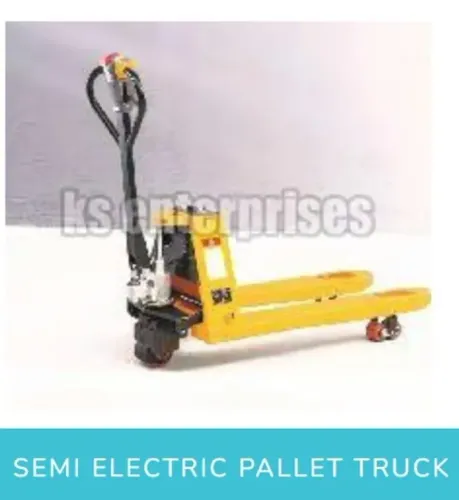
| Semi-electric or hand pallet truck | Travel intensity, ramps, load frequency and operator strain remain low | Lower electrical complexity, but more operator effort and reduced throughput |
| Entire machine | Several major systems are worn, safety defects recur, parts support is poor or repeated downtime exceeds service value | Higher replacement cost and planned downtime |
For Delhi-region users, K. S. Enterprises can connect forklift service for pallet trucks, parts support and equipment selection to a documented powered pallet truck forklift service and repair assessment. That keeps powered pallet truck repair evidence-based rather than sales-led.
Related product
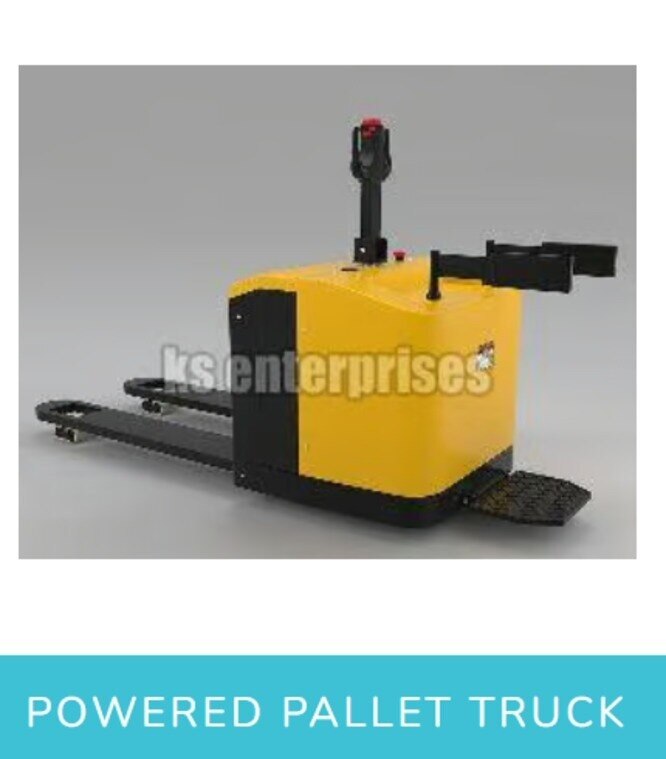
 | Pallet Trucks K. S. Enterprises is a trusted supplier of high-performance Powered Pallet Trucks, delivering efficient and reliable material handling solutions for... View product → |
Frequently asked questions
What causes a powered pallet truck to lose travel speed or acceleration?
Battery-voltage collapse, a dragging electromagnetic brake, worn drive wheel, damaged cable, failing drive motor or controller thermal cutback can reduce performance.
How can you separate a battery fault from a charger or connection fault?
Check the charger output, battery voltage at rest and voltage under load, then inspect plugs, terminals, fuses and cables for heat or corrosion.
When can the load, floor, wheels or duty cycle cause pallet truck performance issues?
Overweight or unbalanced loads, slopes, uneven floors, blocked wheels, worn drive tyres and high-temperature continuous operation can increase resistance or trigger protection limits.
What can you safely check before requesting powered pallet truck repair?
Record the warning code, inspect visible cables and connectors, check tyre condition, confirm the emergency stop is released and remove debris around the wheels.
What should a technician measure before recommending replacement?
Ask for battery capacity and load-test results, charger output, motor current, brake release, controller fault codes, hydraulic pressure and wheel condition before comparing repair with replacement.