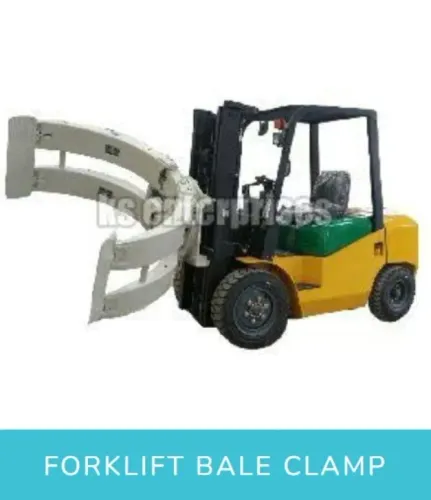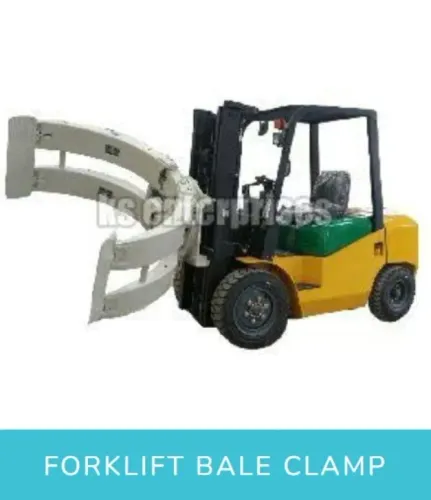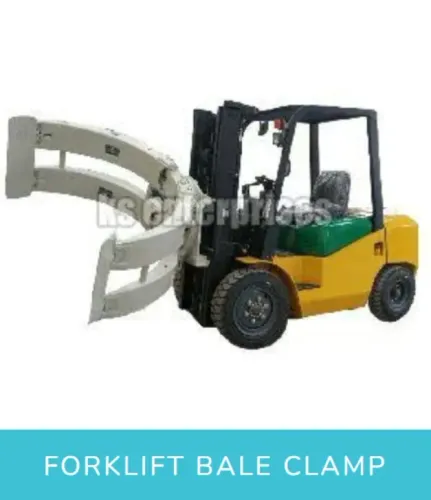

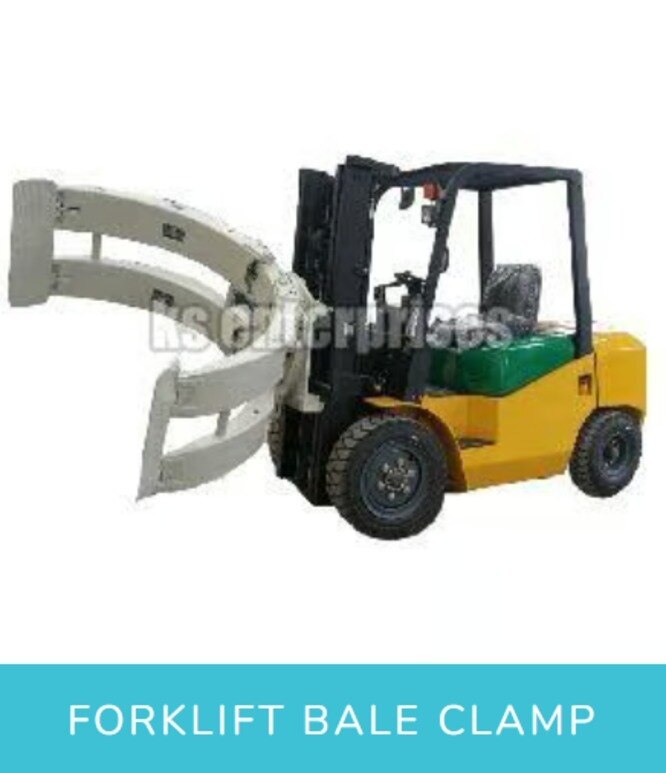
A fork rotator lets a forklift turn a secured pallet, bin, mould, drum or returnable container through a controlled angle without repositioning the truck, but the attachment changes the truck’s capacity, hydraulics and operating limits. By the end, you will know which rotator design and spare parts fit your application, how to verify compatibility, and what documents and tests to demand before installation.
Key takeaways
- Match the rotator to your carriage class, hydraulic flow and residual capacity.
- Recalculate capacity after adding the attachment and load centre changes.
- Identify seals, bearings, hoses and gear parts by exact model and serial number.
- Demand fitment checks, test records and operator instructions before commissioning.
What a fork rotator does, and which attachment function you actually need
A fork rotator turns the fork carriage, and therefore the load, around a horizontal axis. It enables load inversion, controlled dumping, pallet alignment and returnable-container handling without repositioning the forklift.
| Attachment | Primary action | Appropriate use |
|---|---|---|
| Fork rotator | Rotates the carriage or load | Inverting moulds, emptying process bins, turning reusable cages |
| Fork positioner | Changes fork spacing | Matching forks to different pallet or load widths |
| Sideshifter | Moves the load laterally | Aligning pallets with racks or truck bays |
| Tilting carriage | Changes fork angle | Adjusting a load’s approach angle, not fully rotating it |
| Drum rotator | Grips and turns drums | Controlled drum emptying or orientation |
| Purpose-built clamp | Retains by gripping pressure | Securing loads that forks cannot safely hold |
Select a rotator for Delhi applications such as emptying process bins, inverting moulds, aligning pallets and turning reusable cages. A tilting carriage cannot provide the same full rotation, while a drum rotator is unsuitable for an unstructured load that needs fork support.
Do not rely on friction between forks and a load during inversion. Use positive retention, such as a clamp, fork lock or container-specific restraint, when the load could slide or fall.
Combined functions must appear separately in the attachment specification: “rotator with sideshift” is not enough unless the document states the rotation range, sideshift travel and retention method. These forklift attachments also change visibility, forward projection and turning clearance, so assess the complete operating path before selection.
How to compare rotation range, load handling and attachment specifications
Choose a 180-degree fork rotator for turning a load from upright to inverted or dumping it over one side. Choose 360 degrees when repeated orientation changes are part of the process, but verify stopping control and positive load retention before specifying it.
| Rotation range | Best use | Main check |
|---|---|---|
| Hydraulic rotary unit, 180° | Inverting bins, moulds or pallets once | Controlled stop at each end |
| 360° attachment | Repeated orientation changes | Retention, braking and spill control |
Compare these forklift attachments on:
- Rated capacity at the actual load centre, maximum rotation angle, attachment weight and residual lifting capacity
- Required hydraulic flow and pressure, ISO carriage class, fork-section dimensions, visibility and forward projection
- Fork length and spacing: support the load across its stable base, avoid unsupported fork overhang, and recalculate capacity when longer forks move the load centre forward
- Backrest height and strength, especially for loads that could slide rearward during rotation
Bins and drums need positive stabilisation—such as a retaining frame, clamp or purpose-built cradle. Fork friction is not load retention during inversion. Set rotation speed to the load’s centre of gravity and spill risk; a fast cycle can turn a stable bin into a swinging or leaking load.
A fork rotator’s stated rating applies at a specified load centre and orientation. Request the attachment data plate and load chart, then confirm the complete forklift attachments setup rather than relying on the nominal truck rating. Keep matching forklift spare parts available for hydraulic, locking and rotating components.
How to verify forklift compatibility and the revised capacity rating
Start with the truck’s exact model and serial number. “ACE forklift” is not enough for forklift spare parts identification: mast, carriage, axle, hydraulic and electrical variants can differ within one truck family.
- Confirm the ISO carriage class, carriage height, fork dimensions, hook spacing and lower locating feature against the truck and attachment drawings.
- Obtain the attachment data plate, mounting drawings and load chart. Match the attachment model, serial number, rated capacity and attachment weight.
- Verify the auxiliary hydraulic valve, maximum working pressure, required flow, hose-port size and quick-coupler type. Route the hoses through the complete rotation range; insufficient flow causes slow movement or overheating, while excess flow can damage the attachment.
- Request a truck-and-attachment residual-capacity calculation at the actual load centre and rotation angle.
| Check | Why it matters |
|---|---|
| Truck model and serial number | Identifies the correct mast, carriage and hydraulic variant |
| Carriage and mounting dimensions | Prevents unsafe hook or lower-locator engagement |
| Hydraulic specifications | Controls speed, heat, leakage and attachment damage |
Attachment weight consumes capacity, and moving the load centre forward reduces it further. A five-tonne nominal truck rating cannot be used after fitment without a revised capacity plate or manufacturer-approved calculation.
If you are sourcing a fork rotator forklift for spare parts in Delhi, obtain written approval where the modification affects capacity or safe operation. Do not accept a generic part number in place of model-specific confirmation.
Which fork rotator spare parts need exact identification and inspection
Do not order forklift spare parts by appearance alone. Put the attachment make, model and serial number on the quotation, then identify the exact item required.
| Part | Identify it as | Check before ordering |
|---|---|---|
| Seal kit | Seals for the specified rotary unit | Unit model, seal material and shaft size |
| Complete rotary unit | Replacement fork rotator mechanism | Capacity, rotation range, mounting dimensions and serial number |
| Mounting hardware | Hooks, pins, bolts or carrier components | Carriage class and locking arrangement |
| Hydraulic hose | Pressure-rated hose assembly | Length, bore, fittings and full-range movement |
| Rotary union | Hydraulic swivel joint | Port size, pressure rating and rotation specification |
| Locking component | Locking pin or fork-retention part | Correct engagement and manufacturer traceability |
Common failure points include worn carriage hooks or locking pins, rotary-union leakage, damaged hoses, failed seals, gear or bearing backlash, and loss of fork-locking function.
Treat replacement fork arms as safety-critical. Match length, cross-section, heel thickness, upper-hook position, hook spacing, lower locating feature and rated capacity. Use ISO 2330 for fork-arm characteristics and testing, and ISO 23206 for hook-on mounting dimensions.
Before dispatch, inspect:
- Fork straightness and wear; welds and frame condition
- Lock engagement, nameplate details and hydraulic leakage
- Hose movement through the complete rotation range
- Gear or bearing backlash
- Controlled-load operation, not an empty-attachment test
Train operators on the changed capacity plate, visibility, travel position and rotation controls.
What to demand from a Delhi supplier before purchase and commissioning
Do not approve a quotation that names only a generic part number. For a fork rotator forklift for spare parts in delhi, require written confirmation against the truck model, serial number, carriage drawings and mounting dimensions.
| Evidence to demand | What it must confirm |
|---|---|
| Compatibility file | Carriage class, hook spacing, lower locating feature, fork dimensions and fit against drawings |
| Capacity package | Attachment rating, truck rating, actual load-centre capacity, rotation angle and revised capacity plate |
| Hydraulic and installation file | Required flow, pressure, hose-port size, routing, mounting instructions and torque details |
| Support terms | Warranty exclusions, parts traceability, stocked forklift spare parts, safety-critical replacement lead times, commissioning and operator training |
Require a controlled-load demonstration, not an empty-attachment test. Check load retention during rotation, stopping control, hydraulic leakage, brake or locking-pin performance, hose movement, bearing or gear backlash and operator visibility. Test the load your site will actually invert, dump or align.
K. S. Enterprises can be considered as a forklift dealer in delhi when its team supplies this model-specific confirmation and supports ACE forklift equipment; “ACE forklift” or nominal truck tonnage alone is insufficient.
Put these questions in writing: Which carriage class fits? What is the rated capacity at my load centre and rotation angle? What flow and pressure are required? Which spare parts are stocked? What revised capacity chart and installation records will be supplied?
Related product
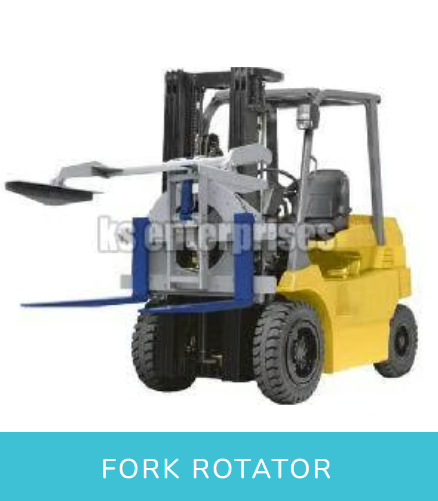 | Forklift Attachments K. S. Enterprises is a trusted supplier of premium-quality Fork Rotators, offering advanced forklift attachment solutions designed to improve... View product → |
Frequently asked questions
What does a fork rotator do?
A fork rotator turns the fork carriage and load around a horizontal axis for inversion, controlled dumping, pallet alignment and container handling.
How do you compare fork rotator specifications?
Compare rotation range, rated load, load centre, carriage class, attachment weight, hydraulic requirements and fork dimensions against the forklift.
How do you verify forklift compatibility with a fork rotator?
Check the forklift data plate, carriage class, hydraulic circuit, mounting dimensions and revised residual capacity with the attachment installed.
Which fork rotator spare parts require exact identification?
Identify seals, bearings, hydraulic hoses, gear components, pins and mounting hardware by the rotator make, model, serial number and part number.
What should a Delhi supplier provide before commissioning?
Request compatibility confirmation, capacity calculations, installation instructions, inspection records, operating guidance and a supervised functional test.