
Buying forklift spare parts requires accurate identification because components can differ between forklift models, capacities, configurations, and production variants. Ordering a visually similar part without confirming compatibility can create further downtime and unnecessary replacement costs.
The first step is to identify the forklift properly. Record the manufacturer, model, serial information where applicable, power type, and any relevant component numbers. Photographs can be useful for initial reference, but they should not replace part numbers or technical identification when these are available.
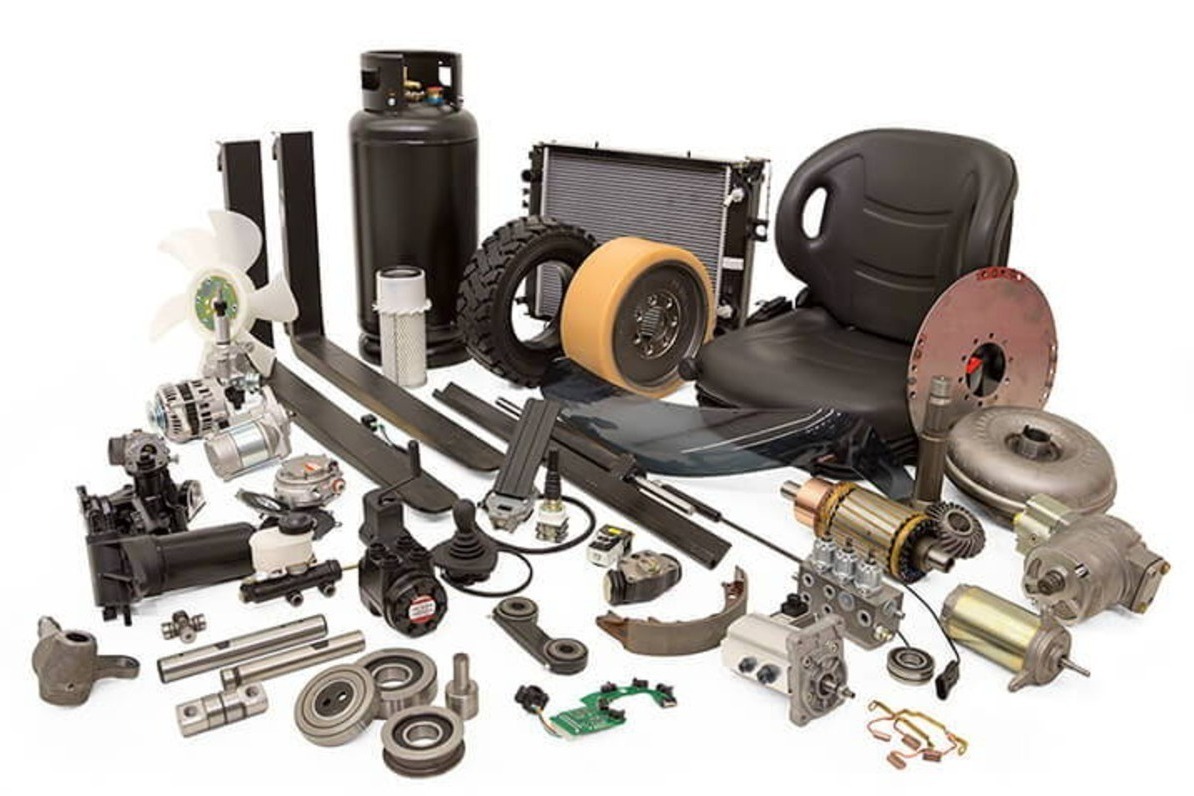
Common forklift parts and maintenance items can relate to:
- Hydraulic systems
- Mast and carriage assemblies
- Forks and load-handling components
- Braking systems
- Steering components
- Electrical systems
- Controllers and switches
- Engine components on diesel equipment
- Battery connectors and electrical components
- Wheels and tyres
- Filters and routine service items
Not every symptom identifies the failed part. For example, slow hydraulic performance does not automatically mean one particular hydraulic component needs replacement. Diagnosis should come before ordering when the cause of the problem is uncertain.
This distinction is important because replacing parts by trial and error can increase maintenance costs while leaving the original fault unresolved.
Businesses should also assess which components justify planned stock. A warehouse operating several forklifts of similar models may benefit from keeping selected fast-moving service items or critical components available. A company with only one occasionally used forklift may require a different inventory strategy.
To decide what to stock, examine service history and ask:
- Which parts are replaced regularly during planned maintenance?
- Which failures have previously caused significant downtime?
- How quickly can each component normally be sourced?
- Are several machines using compatible components?
- Does the component require special storage conditions?
Forklift tyres and batteries should be considered separately because their condition directly influences equipment availability and they require specification matching.
In Gurugram, Haryana, manufacturing and warehousing businesses often depend on forklifts to maintain loading, production, and dispatch schedules. Parts planning can therefore become part of operational continuity rather than simply a maintenance-store activity.
K. S. Enterprises handles forklift-related requirements for industrial users in Gurugram, including spare-part needs. Providing complete machine identification and a clear description of the fault can help reduce ambiguity when discussing replacement components.
Price should not be the only deciding factor. Compatibility, specification, quality, expected service life, and the consequences of equipment downtime should all be considered.
A useful spare-parts process combines accurate identification with maintenance records. When businesses know which forklifts they operate, which components are regularly consumed, and which failures have the greatest operational impact, purchasing becomes more systematic. That preparation can reduce last-minute sourcing pressure when a forklift requires maintenance.