
Purchasing a forklift machine should begin with the material being moved, not with a preferred model or price range. Forklifts that appear similar can differ in capacity, lift height, mast design, dimensions, tyres, power source, and suitability for particular operating environments.
A structured site assessment helps industrial buyers establish what they actually need.
Start with the load. Record the maximum and normal load weights, dimensions, pallet type, and whether the load is stable and evenly distributed. If the forklift will use clamps, sideshifters, fork positioners, or other attachments, include this information from the beginning.
Next, measure the lifting requirement. Determine the highest level at which the load needs to be placed and assess overhead restrictions such as doors, beams, mezzanines, or other structures.
Warehouse geometry is equally important. Measure aisle widths, intersections, rack clearances, door openings, and areas where the forklift must turn. Buying a truck that technically handles the load but cannot manoeuvre efficiently inside the facility creates an avoidable operational problem.
Then assess the working surface.
Indoor warehouse floors may support one equipment configuration, while outdoor yards, gradients, uneven surfaces, and mixed environments can require different tyres, ground clearance, or machine characteristics.
Power-source selection should follow the duty cycle. Electric forklifts can suit many indoor applications where charging infrastructure is practical. Diesel forklifts may be evaluated for demanding outdoor or mixed-use applications. The decision should account for daily hours, shifts, ventilation, charging or refuelling arrangements, and maintenance needs.
Buyers should also estimate utilisation. A forklift used occasionally for receiving goods has a different duty cycle from one continuously moving pallets between production and dispatch.
Before placing an order, confirm:
- Rated capacity for the intended application
- Required lift height
- Mast configuration
- Fork dimensions
- Overall machine dimensions
- Tyre specification
- Power source
- Battery and charger details where relevant
- Required attachments
- Service arrangements
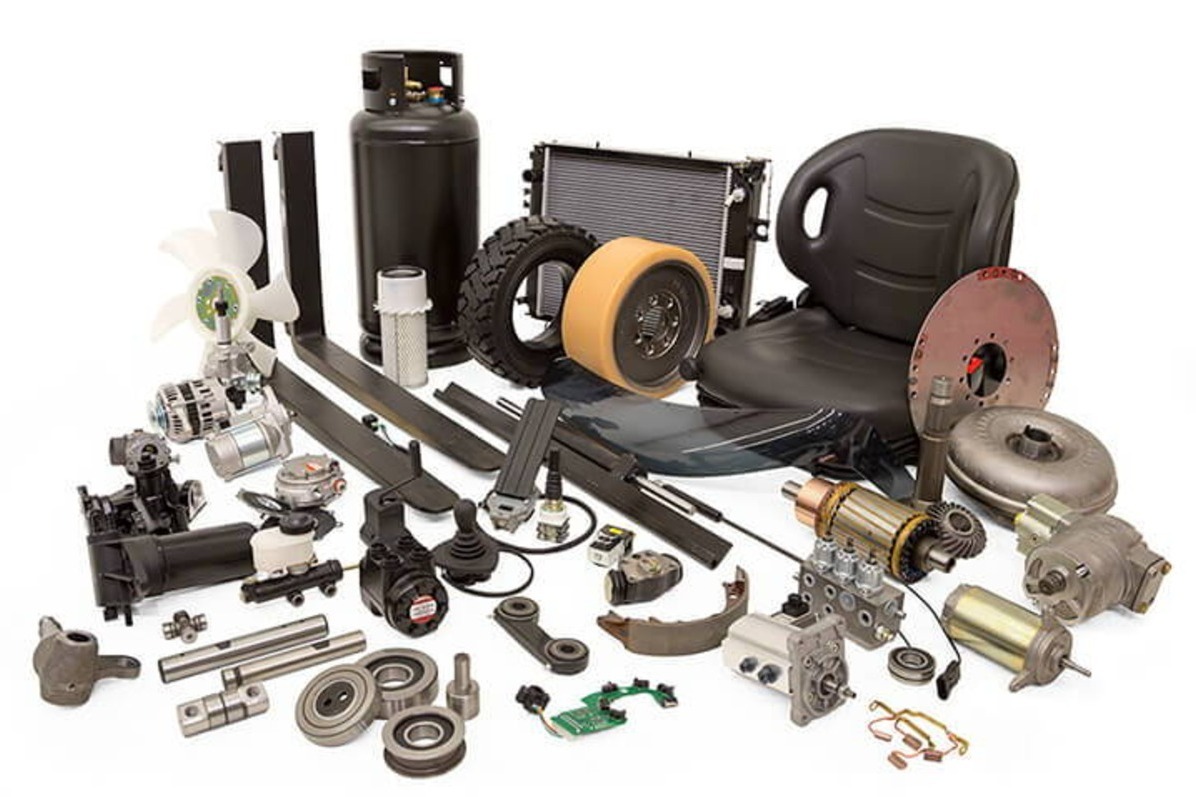
- Spare-parts availability
Businesses in Gurugram, Haryana, may operate in automotive, engineering, manufacturing, warehousing, logistics, distribution, and numerous supporting industries. Their handling requirements can therefore differ substantially even when both businesses request a forklift of the same nominal capacity.
K. S. Enterprises works with customers evaluating forklifts and industrial material handling equipment in Gurugram. Sharing site and application details before equipment selection allows the discussion to focus on operational fit rather than only catalogue specifications.
A forklift is most useful when it integrates smoothly into the existing workflow. Capacity is important, but so are space, lift height, surface conditions, power requirements, operator environment, maintenance, and future availability.
For a business ready to purchase, documenting these requirements before requesting a final quotation is one of the simplest ways to make comparisons clearer. It enables suppliers to quote against the same operating brief and helps buyers select a forklift machine based on what the facility genuinely requires rather than what looks suitable on paper.