
A platform forklift that slows down, cuts out, or stops charging does not automatically need a new battery. By identifying the battery chemistry, checking voltage and connections, and separating charger or truck faults from cell failure, you can choose a safer and more defensible repair.
Key takeaways
- Read voltage, ampere-hour rating, chemistry, serial number, and date from the battery nameplate.
- Test battery voltage, charger output, connectors, and truck fault codes in sequence.
- Keep lead-acid batteries ventilated, charged with the correct profile, and free from damaged cables.
- Treat lithium-ion faults as pack-level issues requiring qualified diagnostic equipment and service records.
What the Battery Rating and Failure Symptoms Tell You
A traction battery is a high-capacity pack built for repeated discharge: lead-acid cells or lithium-ion modules connected to deliver the truck’s rated power. Its nameplate identifies chemistry, nominal voltage, ampere-hour capacity or kilowatt-hour rating, serial number, and manufacture date.
Do not confuse it with a separate 12-volt control battery, which powers instruments, relays, and control circuits.
Reduced travel speed, weak lifting, short run time, low-voltage alarms, sudden cut-out, slow charging, excessive heat, swelling, or electrolyte leakage point to a battery or its connections. A charger that stops before full charge adds another warning.
| Condition | What it indicates | Useful confirmation |
|---|---|---|
| Low state of charge | The pack simply needs correct charging | Voltage rises normally and runtime returns |
| Sulphated lead-acid cells | Chronic undercharging or storage partly discharged has reduced capacity | Longer charging and failed capacity test |
| Failed or shorted cell | One cell collapses under load, causing rapid discharge | Cell readings during charge and load |
| Corroded terminals or loose connections | Resistance causes voltage drop and heat | Inspect, tighten, and measure loaded voltage drop |
| End-of-life pack | Capacity remains below the truck’s required working time | Controlled load or capacity test |
Open-circuit voltage alone cannot prove health. One weak cell can show an acceptable resting reading yet discharge rapidly; use load or capacity testing before approving replacement. A service record should capture the nameplate data, fault codes, resting and charging voltage, and test result.
A Diagnostic Sequence That Separates Battery and Truck Faults
Start with a record, not a replacement order. Write down the truck model, battery chemistry, nominal voltage, ampere-hour or kilowatt-hour rating, serial number, charger model, battery age, and every displayed fault code.
- Inspect the pack, plug, receptacle, cable lugs, fuse, contactor, key switch, wiring, and controller. Look for looseness, corrosion, heat discoloration, melted insulation, and physical damage.
- Check the charger label and measured output against the battery nameplate. A mismatched charger can create slow charging, overheating, or repeated fault codes.
- Measure resting pack voltage after the truck has been idle. Then measure voltage during travel and while lifting a known load.
- Compare actual run time with the truck manufacturer’s specification under similar load and operating conditions.
- Record ambient heat, dust, cold-storage exposure, charger-fan condition, cooling paths, and charging-area ventilation in Gurugram service diagnostics.
| Fault pattern | Likely area | Confirming check |
|---|---|---|
| Rapid voltage collapse under load | Battery cell or high-resistance connection | Test individual cells or modules and measure voltage drop across each connection |
| Stable battery voltage but weak movement | Motor, hydraulic pump, brake, controller, or control circuit | Check motor current, pump operation, brake release, controller codes, and control-circuit voltage |
| Correct battery voltage but poor charging | Charger, plug, receptacle, or charge circuit | Verify charger output and inspect charge-path continuity |
A hot connector, fuse, contactor, or cable lug can drop voltage under load and trigger repeated low-battery cut-outs without an internally failed battery. This electric platform forklift repair sequence prevents a battery swap from hiding a truck or charger fault.
Lead-Acid Charging, Maintenance, and Battery Safety
Charge a lead-acid traction battery fully after each work cycle with a charger matched to its chemistry, voltage, capacity, and connector. Chronic undercharging or leaving it partly discharged causes sulphation, longer charging times, and lost capacity—even when the battery appears to charge normally.
- Charge in a ventilated area because the process produces hydrogen and oxygen. Prohibit smoking, flames, and spark sources, and isolate electrical equipment before repair. Let the battery cool before service.
- For flooded cells, check electrolyte level after charging. Add only distilled or de-ionised water, never acid as routine maintenance, and stop below the manufacturer’s fill mark; overfilling can force electrolyte out during charging.
- Clean corrosion only with the approved procedure. Inspect cable lugs and terminals for looseness, heat damage, and corrosion, then torque them to the battery or truck manufacturer’s specification.
- Wear chemical-resistant gloves, eye and face protection, and protective clothing. Keep an immediately available eyewash or body-flushing facility nearby, and define the spill response before work starts.
- Use equalisation only as a controlled overcharge for a suitable flooded battery when its manufacturer permits it. Never use equalisation as a generic fix on sealed lead-acid or lithium-ion packs.
Do not charge a swollen, leaking, cracked, or heat-damaged battery. Remove it from service and obtain the manufacturer’s safety procedure before further handling.
Lithium-Ion Faults Require Pack-Level Diagnosis
Lithium-ion service changes from cell maintenance to controlled pack diagnosis. The battery-management system can shut down the pack for over-temperature, under-temperature, low voltage, insulation damage, or a communication error; resetting the truck does not fix the cause.
1. Confirm the battery nameplate and manuals before connecting equipment. The charger must match the chemistry, nominal voltage, connector, and required battery-management communication protocol. A wrong charger can cause non-charging, overheating, nuisance faults, or battery damage.
2. Treat a no-charge, thermal, insulation, or communication fault as a pack-level fault. Record the battery-management-system codes, pack voltage, module data, temperatures, insulation readings, charger data, and event history, then use the battery maker’s approved repair or replacement process.
3. Do not open a lithium-ion pack, replace individual cells, bypass its management system, or attempt a field repair. Cell imbalance and hidden internal damage can turn an apparently successful repair into a thermal event.
4. Isolate and remove from service any pack that is swollen, dropped, smoking, leaking, unusually hot, or heat-damaged. Keep it away from the forklift, charging area, ignition sources, and unauthorised handling; follow the manufacturer’s emergency procedure.
Lead-acid rules do not transfer to lithium-ion. Do not add water, add acid, or perform equalisation on a lithium-ion pack. Confirm the chemistry, voltage, charger, and service instructions before any work.
Choosing the Right Repair and Service Record in Gurugram
Choose corrective repair when a specific component has failed, planned maintenance when the battery remains serviceable, and replacement when testing shows lost capacity or the pack cannot be safely restored.
| Option | What it means | When it applies |
|---|---|---|
| Corrective repair | Fix a failed cell, charger, plug, receptacle, fuse, contactor, cable, or control fault | A measured fault identifies a repairable component |
| Planned maintenance | Clean the battery, inspect and torque terminals, check flooded-battery electrolyte, check the charger, and perform periodic load or capacity testing | The pack operates but needs scheduled service |
| Replacement | Install a compatible, correctly secured battery | Capacity testing, physical damage, or repeated faults make continued use uneconomical or unsafe |
Require a written record before approving replacement. It must show chemistry, nominal voltage, ampere-hour or kilowatt-hour rating, serial number, age, charger model, fault codes, resting voltage, charging voltage, individual-cell or module readings where applicable, and capacity-test results. Ask the provider to separate findings, safety actions, repair scope, and replacement recommendation.
Confirm that any replacement matches voltage, dimensions, connector, battery-retention method, and the manufacturer’s minimum weight. Battery mass affects counterbalance and stability, while a loose or underweight pack creates a retention hazard.
For electric platform for forklift battery problems repair in gurugram, K. S. Enterprises can be considered when you need equipment-specific parts, inspection, or support rather than an unsupported battery swap. This documentation makes forklift battery service in Gurugram easier to audit and compare.
Related product
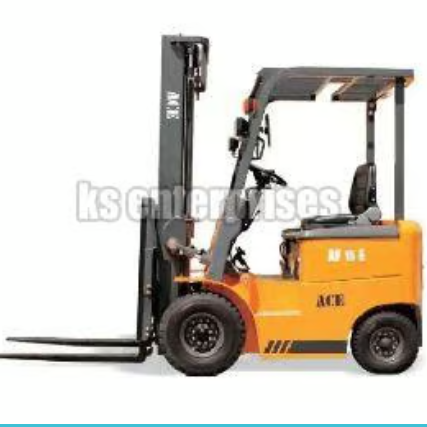 | Forklifts K. S. Enterprises is a trusted supplier of premium-quality Electric Platforms, offering safe, efficient, and reliable elevated access solutions for a... View product → |
Frequently asked questions
What does an electric platform forklift battery nameplate tell you?
It identifies the chemistry, nominal voltage, ampere-hour or kilowatt-hour capacity, serial number, and manufacture date. Compare these details with the truck and charger specifications.
How do you separate a battery fault from an electric platform forklift fault?
Check the battery nameplate, visible cables and connectors, battery voltage, charger output, and truck fault codes in sequence. A fault that remains after a verified battery and charger test points toward the truck.
What safety steps apply when charging a lead-acid forklift battery?
Use the correct charger profile, keep the charging area ventilated, inspect cables and connectors, and follow the battery maker’s instructions for watering and personal protective equipment.
Why do lithium-ion forklift battery faults need pack-level diagnosis?
A lithium-ion pack contains modules, battery-management electronics, sensors, contactors, and protective circuits. A technician must identify which pack component triggered the fault before attempting repair.
What should a forklift battery service record contain in Gurugram?
Request the battery serial number, fault symptoms, test readings, charger details, replaced parts, technician findings, repair date, and recommended follow-up checks.