
A warehouse or factory rarely depends on one type of machine. Forklifts may handle heavier loads, stackers may serve narrower storage areas, and pallet trucks may support short-distance movement. Choosing a capable material handling equipment supplier can therefore simplify equipment planning across multiple operations.
For industrial businesses in Greater Noida, supplier evaluation should begin with application knowledge. The objective is not to find the provider with the longest product list, but one capable of matching equipment to real operating requirements.
Look for Application-Based Recommendations
A supplier should first understand the workflow.
Useful discussions include where materials enter the facility, how they are stored, the distance they travel, the heights at which they are placed, and how frequently each movement occurs.
This approach can prevent over-investment. A full-size forklift may be unnecessary for a short floor-level movement that can be handled efficiently with a pallet truck. Conversely, basic equipment can become inefficient when loads need frequent powered movement or vertical stacking.
Review the Equipment Range
Businesses with varied operations may benefit from a supplier that can address multiple categories such as:
- Forklifts
- Electric stackers
- Industrial stackers
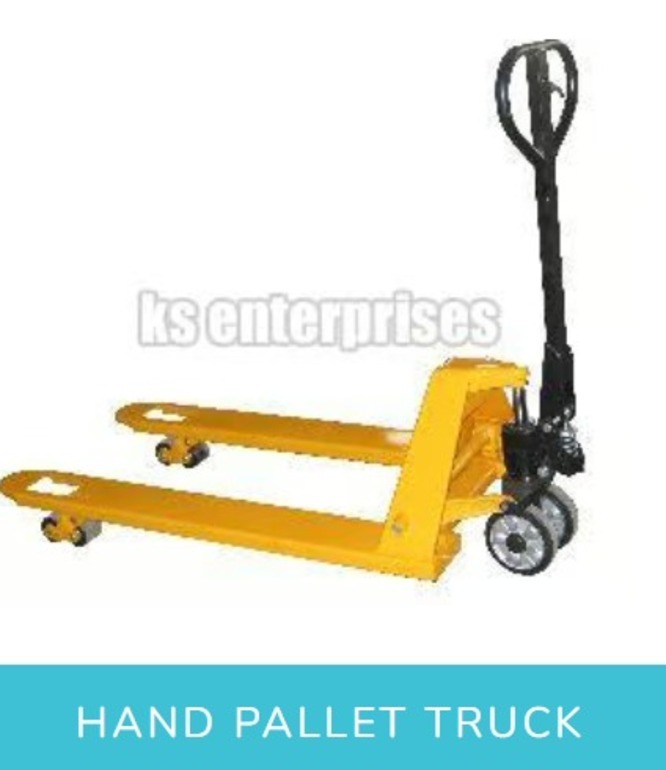
- Hand pallet trucks
- Electric pallet trucks
- Forklift attachments
- Batteries
- Tyres
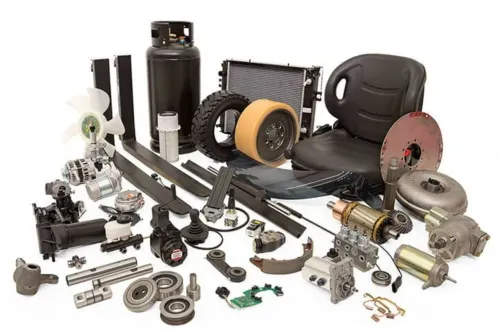
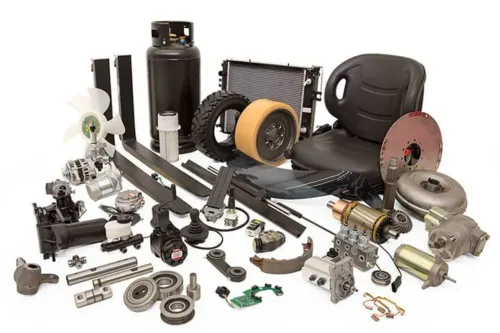
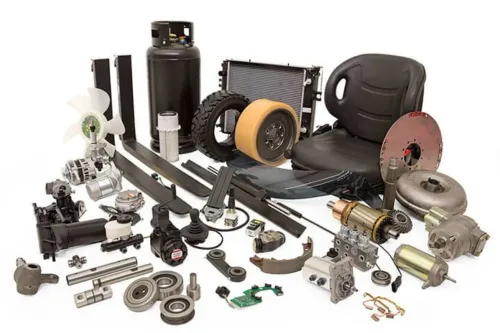
- Spare parts
A broader capability can be useful when equipment needs evolve, although suitability and support remain more important than range alone.
Check After-Sales Readiness
Material handling equipment is productive only while it is available for work.
Ask how the supplier handles preventive maintenance, spare parts, troubleshooting, and repairs. Local service accessibility can become particularly important when equipment performs essential loading or production-support functions.
Compare Lifecycle Costs
The purchase price is visible immediately, while operating costs appear gradually.
Energy or fuel, service intervals, replacement tyres, battery requirements, spare parts, downtime, and equipment utilization all influence total cost.
A slightly different machine configuration may provide better long-term value if it is more appropriate for the duty cycle.
K. S. Enterprises works with material handling requirements in Greater Noida, Uttar Pradesh, serving customers who may need equipment and related support for warehouse and industrial applications. When discussing a requirement, businesses can improve the quality of recommendations by sharing site and load information from the beginning.
Use a Site-Based Equipment Checklist
Before finalizing a supplier, document your maximum load, storage height, aisle width, travel distance, floor condition, operating hours, pallet dimensions, and future expansion plans.
Then ask the provider to explain how the proposed equipment addresses those conditions.
The right material handling equipment supplier should contribute to a practical equipment decision, not merely complete a transaction. Technical understanding, appropriate selection, service capability, and parts availability are all important indicators of whether the relationship can support day-to-day operations after the equipment reaches the site.